Four SAMPLE agents find more thermostable glycoside hydrolases while sampling under 2% of a sequence landscape
What was demonstrated
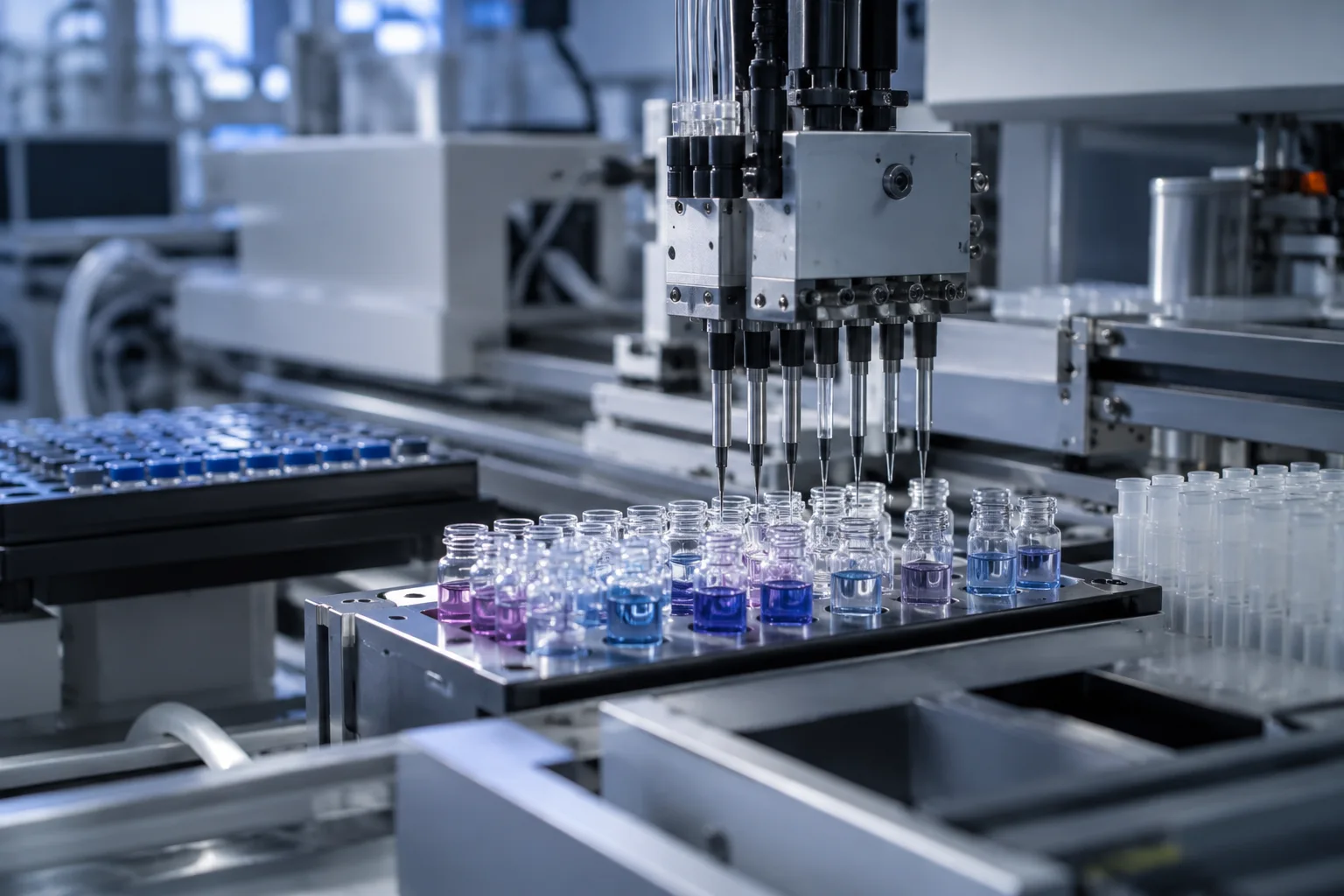
Four independent SAMPLE agents ran automated design-test-learn cycles to search a 1,352-sequence combinatorial landscape for thermostable GH1 glycoside hydrolases. Using the platform assay, each agent found sequences at least 12 °C more stable than the starting sequences while sampling less than 2% of the landscape. Researchers then expressed the top design from each agent in Escherichia coli and confirmed improved thermostability with lysate-based assays, although manual measurements were lower than the automated results.
Why it matters
The work demonstrates an integrated agent and robotic workflow for a specific protein-engineering task and quantifies how little of its defined sequence landscape was sampled.
Caveats
- The result concerns one GH1 enzyme family and a defined combinatorial search landscape, not arbitrary proteins or functions.
- Automated and human validation used different expression and assay conditions, and the manual assays found smaller improvements than the automated setup.
- The activity and stability results do not establish performance in industrial production or therapeutic applications.
Technology profiles
Sources
- peer reviewed paper
Self-driving laboratories to autonomously navigate the protein fitness landscape
Jacob T. Rapp, Bennett J. Bremer, Philip A. Romero. Nature Chemical Engineering, 11 Jan 2024. DOI: 10.1038/s44286-023-00002-4.
Last reviewed 21 Oct 2026.