Google reports a superconducting chip run estimated to take 13,000 times longer classically
What was demonstrated
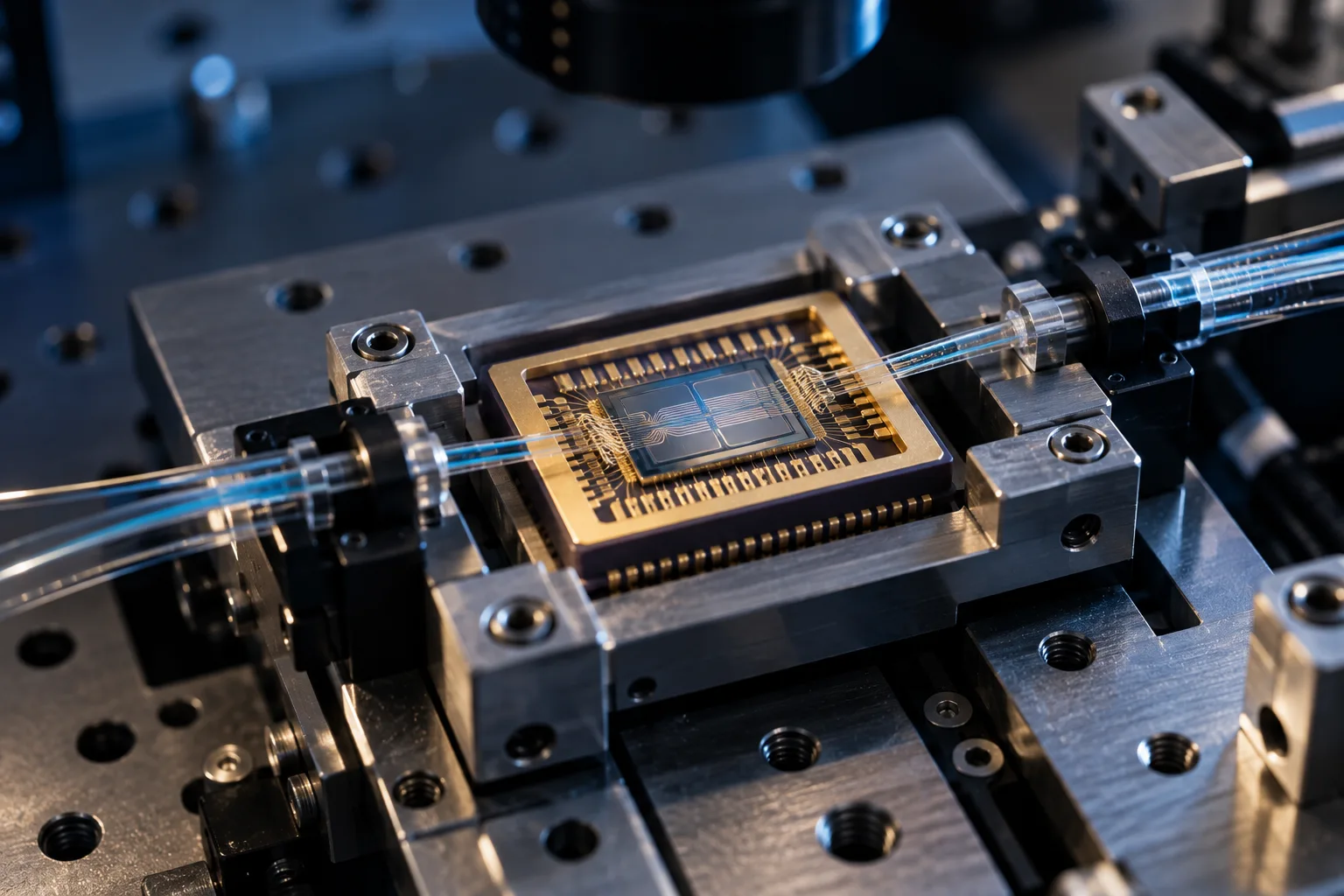
On its Willow superconducting processor, Google Quantum AI ran a benchmark circuit set measuring second-order out-of-time-order correlators (OTOC(2)). The run took about 2 hours. Google estimates the same task would take about 13,000 times longer on a classical supercomputer, compared with the best classical algorithm it could find. A set of second-order OTOC values measured on Willow is estimated to take about 3.2 years per data point to simulate on the Frontier supercomputer, according to a figure caption. The classical estimate rests on red-teaming by the authors, which they describe as about 10 person-years of work across nine classical simulation algorithms.
Why it matters
If the classical estimate holds, it suggests a superconducting processor can run a task that known classical methods would struggle to simulate. The authors also argue that the output is a verifiable expectation value, which another quantum computer or a natural quantum system could reproduce.
Caveats
- The 13,000-times figure is an estimate against the best classical methods the authors tried, not a measured classical run. It could fall if better classical algorithms are found.
- The task is a set of benchmarking circuits. The authors describe it as a route toward practical quantum advantage, not as a practical application that has been demonstrated.
- The qubit count differs between parts of the work. The Google blog gives 103 qubits for the Quantum Echoes run and 65 qubits for the second-order OTOC analysis, and a figure caption cites 105 available qubits. The Nature article could not be opened for checking, so the published title and DOI are taken from the Google blog.
Technology profiles
Sources
- company announcement
A verifiable quantum advantage
Google Quantum AI. Google Research, 22 Oct 2025. - preprint
Constructive interference at the edge of quantum ergodic dynamics
Dmitry A. Abanin, et al.. arXiv, 11 Jun 2025. DOI: 10.48550/arXiv.2506.10191.
Last reviewed 21 Oct 2026.