How far away is AI that proposes, tests and confirms its own scientific discoveries?
Automated labs can already run narrow loops in which the result of one experiment chooses the next, and AI systems can propose hypotheses that some labs have tested. The headline results are contested, though. The A-Lab's materials claims were corrected in January 2026, and an October 2025 claim that GPT-5 had solved open Erdős problems was withdrawn after the solutions were found in existing literature. In the sources reviewed, no AI-originated discovery has yet been accepted as a major result.
Far away. The science works, but nobody has built a working system yet.
Closed loops that choose each next experiment from their own measurements have been shown in narrow materials synthesis tasks, and AI co-scientist systems have produced hypotheses that some labs tested. These demonstrations are bounded to selected materials and research goals. Two headline claims were later corrected or withdrawn, and no AI-originated result has been accepted by independent experts as a major discovery in the sources reviewed. The stage is therefore science-demonstrated for narrow cases, not a general capability.
The tech tree
Everything recorded on Vrulum that this future needs, oldest foundations at the top and the goal at the bottom. Lines show what each step requires.
- 2023Autonomous laboratoriesResearch and prototypes Being researched.
- 2023AI mathematical reasoning and theorem provingResearch and prototypes Being researched.
- 2023Closed-loop experiments in a narrow materials taskDone Unlocked.
- 2025AI co-scientist proposes hypotheses that labs testDone Unlocked.
- 2025AI-written paper accepted at a workshopDone Unlocked.
- 2025AI-driven search for new mathematical constructionsIn progress Being researched.
- 2026Materials claims re-analysed and correctedDone Unlocked.
- Date not recordedAI-originated result accepted as a major discoveryNot started Locked.
- GoalAI that makes its own scientific discoveriesGoalRequires: Autonomous laboratories, AI mathematical reasoning and theorem proving, Closed-loop experiments in a narrow materials task, Materials claims re-analysed and corrected, AI co-scientist proposes hypotheses that labs test, AI-written paper accepted at a workshop, AI-driven search for new mathematical constructions, AI-originated result accepted as a major discovery. Locked.
The road so far
4 of 6 steps done, 1 in progress.
- Done · 29 Nov 2023Closed-loop experiments in a narrow materials task
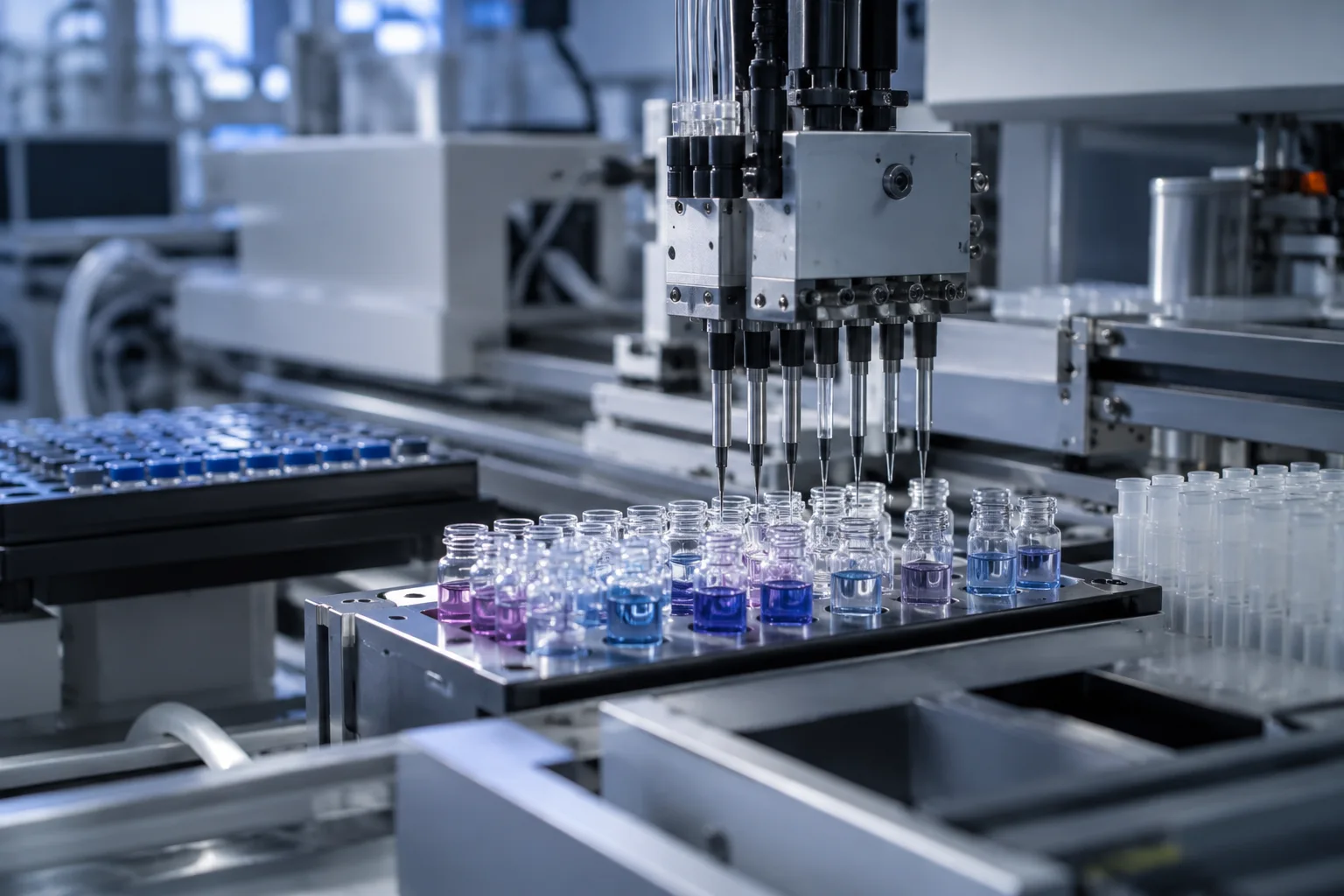
The A-Lab, a Lawrence Berkeley National Laboratory platform, used machine learning to plan synthesis recipes and interpret results from robot-run experiments, with an active-learning step that proposed new experiments. The Nature paper was published online on 29 November 2023 and reported over 40 novel inorganic materials. The claim is bounded to inorganic materials synthesis in that platform. [1][2]
- Done · 19 Jan 2026Materials claims re-analysed and corrected
Outside researchers reported systematic errors in a January 2024 preprint that questioned the A-Lab results. The authors' correction of 19 January 2026 says the platform came to the correct conclusion in 36 of its 40 reported successes, and that four compounds were inconclusive from X-ray diffraction alone. The correction excludes those four from the updated count of compounds successfully made. [1][2]
- Done · 19 Feb 2025AI co-scientist proposes hypotheses that labs test
Google announced its AI co-scientist on 19 February 2025. Its wet-lab tests covered drug repurposing, treatment target discovery and antimicrobial resistance. For acute myeloid leukaemia, the suggested drugs inhibited tumour cell viability at clinically relevant concentrations in several cell lines. The validation covered 11 research goals for expert assessment, and Google describes the system as a collaborative, assistive tool for scientists. [4]
- Done · 12 Mar 2025AI-written paper accepted at a workshop
Sakana AI submitted three AI-generated papers to a workshop at ICLR 2025, which received 43 papers. One paper reached the workshop's acceptance bar, with reviewer scores of 6, 7 and 6. Under the experiment's rules it was withdrawn rather than published. The authors judged the work preliminary and said citation errors appeared in the papers. A Nature paper on the AI Scientist system was published in 2026. [5][6]
- In progress · 3 Nov 2025AI-driven search for new mathematical constructions
Georgiev, Gomez-Serrano, Tao and Wagner applied AlphaEvolve to 67 problems in analysis, combinatorics, geometry and number theory. The authors report that it matched the best known solutions in most cases and improved several others. The abstract gives no specific new bounds, so the size of each gain needs checking in the full paper. [7]
- Not startedAI-originated result accepted as a major discovery
No AI-originated result in the sources reviewed has been widely accepted as a major advance. In October 2025, an OpenAI researcher posted that GPT-5 had found solutions to ten previously unsolved Erdős problems. The posts were mostly deleted and the claim was withdrawn. Thomas Bloom, who runs the erdosproblems.com database, said GPT-5 had found existing published research that he had missed. [8]
Why it matters
If AI systems can propose hypotheses and run the tests that check them, research could move faster and cover more ground. The same systems can also produce results that look new but are wrong, already known or weakly measured. Checking novelty and reproducing results would need to become routine before an AI-made finding counts as a discovery.
What stands in the way
- Novelty is hard to confirm. The October 2025 Erdős claim showed how an AI result can match earlier published work that its authors had not found.
- Measurement interpretation is contested. X-ray diffraction alone could not confirm four A-Lab targets, which changed the reported success count.
- Reproducibility is not yet shown in independent laboratories. Sakana's own write-up notes citation errors in its AI-written papers.
- Automated review may not catch flaws. The Nature paper on the AI Scientist warns of taxing overwhelmed review systems and adding noise to the scientific literature.
- Autonomy is narrow. The A-Lab results cover selected inorganic materials, and the co-scientist lab validation covered a small number of research goals.
Signals to watch
- Independent groups reproducing the corrected A-Lab materials results from published raw diffraction data.
- Full peer-reviewed papers on the co-scientist lab validations, with sample sizes and raw data reported.
- AI-generated mathematical results checked in formal proof systems and accepted by journals as new rather than rediscovered.
- Public trackers of AI contributions to open problems marking which results are new, partial or already known.
- Journal and conference policies on AI-written papers and automated review, and how these change after the Sakana results.
Sources
- peer reviewed paper
Author Correction: An autonomous laboratory for the accelerated synthesis of inorganic materials
Nathan J. Szymanski, Bernardus Rendy, Yuxing Fei et al.. Nature, 19 Jan 2026. - news
New analysis raises doubts over autonomous lab's materials 'discoveries'
Julia Robinson. Chemistry World, 16 Jan 2024. - news
Are we rushing ahead with AI in the lab?
Julia Robinson. Chemistry World, 2 May 2024. - company announcement
Accelerating scientific breakthroughs with an AI co-scientist
Juraj Gottweis, Vivek Natarajan. Google Research, 19 Feb 2025. - company announcement
The AI Scientist Generates its First Peer-Reviewed Scientific Publication
Sakana AI, 12 Mar 2025. - peer reviewed paper
Towards End-to-End Automation of AI Research
Yutaro Yamada, Robert Tjarko Lange, Cong Lu et al.. Nature (journal reference 651, 914-919 (2026); arXiv record), 31 Mar 2026. - preprint
Mathematical exploration and discovery at scale
Bogdan Georgiev, Javier Gómez-Serrano, Terence Tao et al.. arXiv, 3 Nov 2025. - news
Leading OpenAI researcher announced a GPT-5 math breakthrough that never happened
Matthias Bastian. The Decoder, 18 Oct 2025.
Last reviewed 21 Oct 2026.