Factory-built reactor module for an isolated town
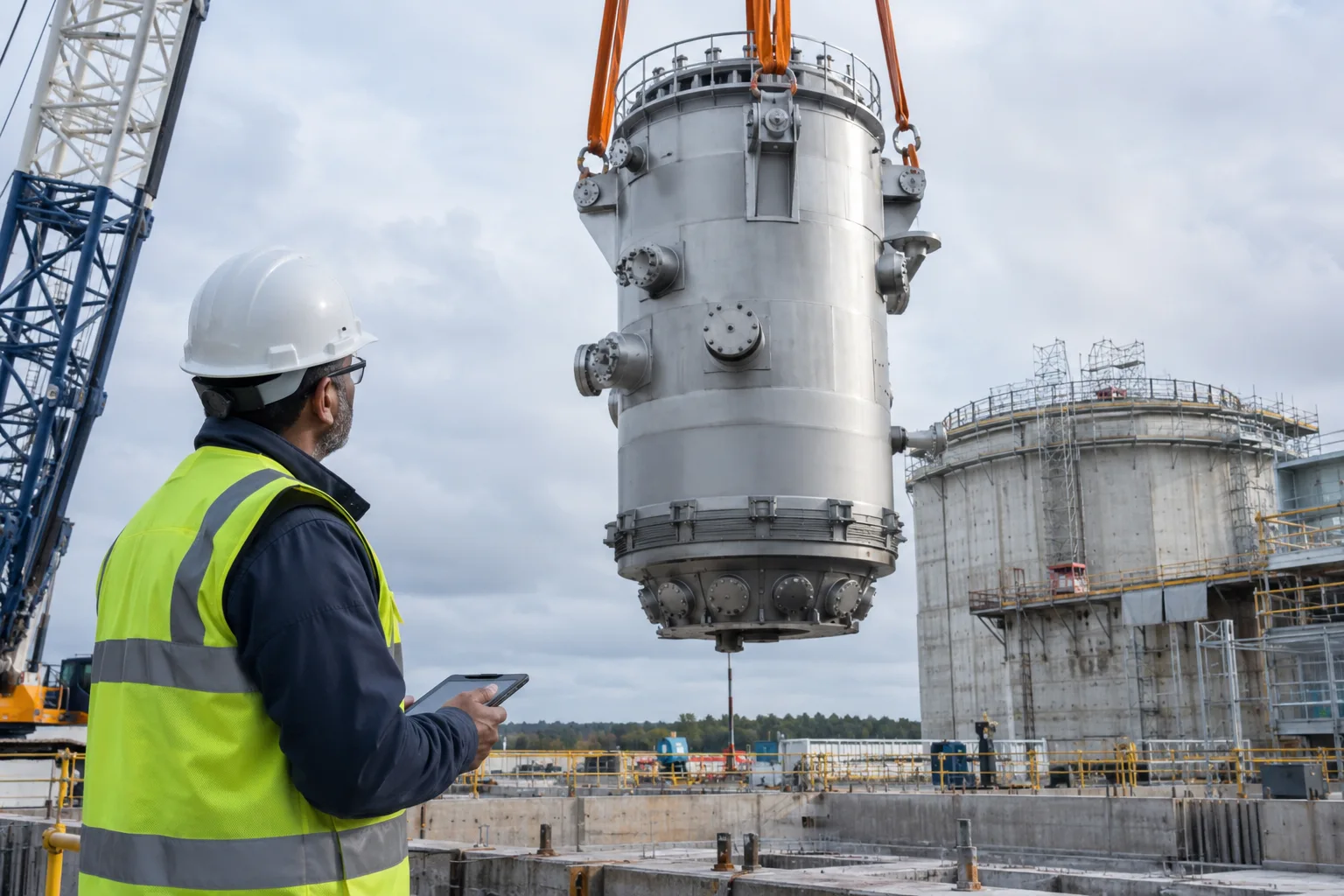
This is an idea, not a product. Nothing here has been built or tested unless a linked technology profile says so.
The problem
Some isolated towns and mining sites may not be able to connect easily to a large grid, so they may need a local source of firm power. A small reactor could in principle fill that role, but the community would need a supply it can plan around.
The idea
The realistic first version is a site-specific feasibility study for one community, not a built plant. It would size a single small reactor module against the town's demand and check whether a licensed design could be sited, cooled and serviced there. The output would be a decision record for the community and the regulator, with cost and licensing questions left open until verified figures exist.
Enabling technology
- Small modular nuclear reactors: Small modular reactors are fission reactors with a smaller output than conventional nuclear plants, intended to be built partly in factories. Regulators have licensed a first construction project in Canada and approved a design in the United States. The sources reviewed here give no verified operating or cost figures for these designs.
What stands in the way
- The only SMR design in the profiles that has been licensed for construction is the BWRX-300 at Darlington. That licence covers one unit at one site and carries no operating record, so its performance in a remote setting is untested.
- Each project needs its own licence for a specific site, even when the reactor design has already been approved. A town project would need a separate regulatory process before any construction.
- The sources reviewed here give no verified cost figures for any SMR design, so it is unknown whether a single small unit could be affordable for a small population.
- Each unit is smaller than a large plant, so the number of units and how they are sized to a town's demand is an open design question.
- The profiles note that existing grid sites may already have connections and cooling infrastructure. A remote town may have neither, and the profiles do not cover how that changes the design.
A cheap way to test it
Build a bench-scale, non-nuclear water loop, heated electrically, that relies on natural circulation, meaning the water moves without a pump. Step the heater output up and down through a fixed sequence and record the flow rate and temperatures at each step. Repeat the full sequence with the cooling sink raised to mimic a warm site. Before the first run, write the step sequence, the test duration and an acceptable range for flow rate and temperature at each step into the test plan. A pass means every reading stays inside that range in both runs. A fail means the cooling design needs rework before any site study begins. The rig uses no fuel or radioactive material, so it can be run in a standard laboratory with electrical and heat safety controls.