Heat-activated scratch-repair coating for outdoor equipment
This is an idea, not a product. Nothing here has been built or tested unless a linked technology profile says so.
The problem
Small scratches in painted outdoor equipment can expose the underlying surface to moisture and corrosion, while frequent manual touch-up takes time.
The idea
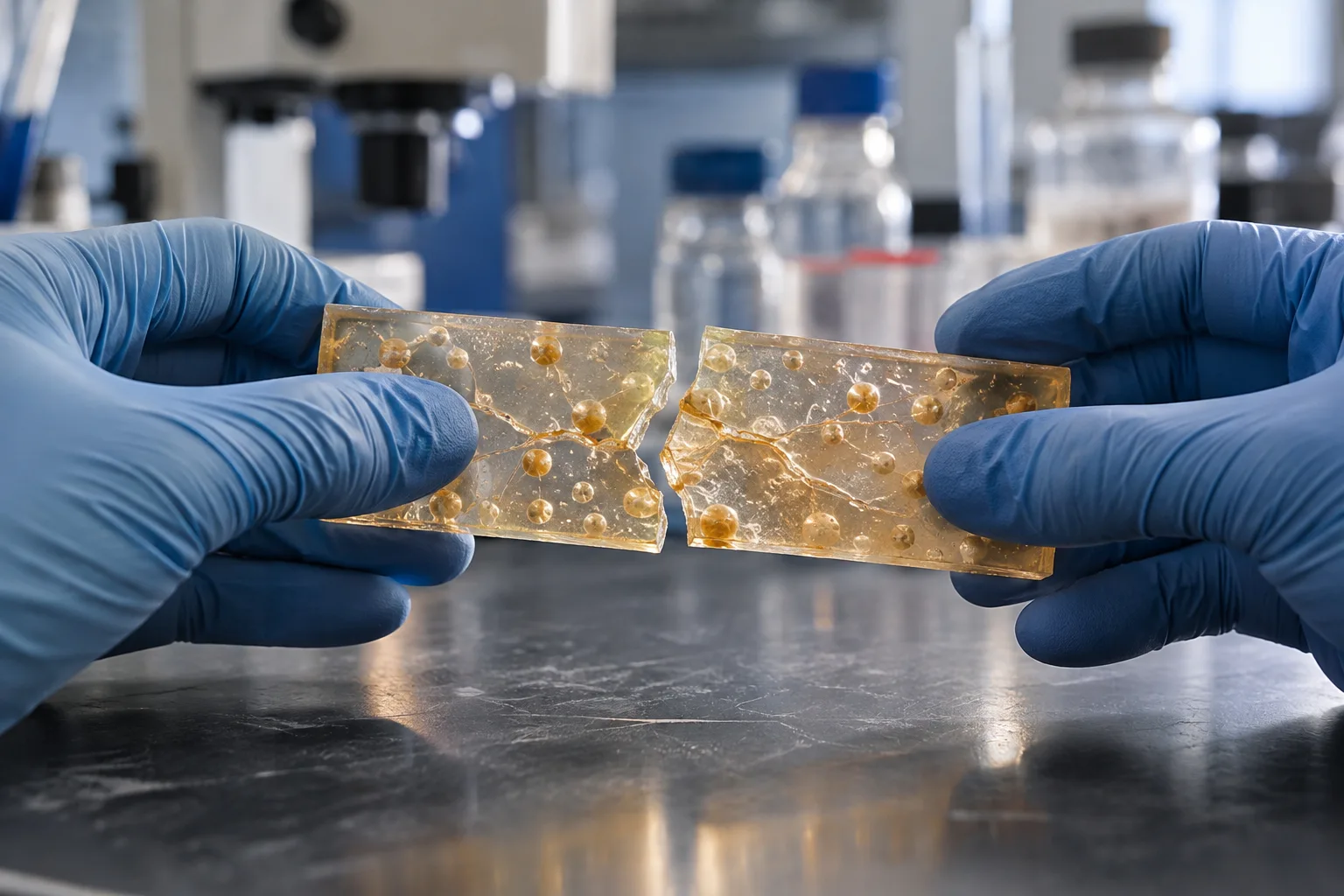
A clear protective layer based on a self-healing polymer would be applied over selected metal parts. After a minor scratch, a specified trigger such as gentle warming would help the polymer close or rebond the damaged area. The idea targets small surface damage, not structural cracks or severe impact.
Enabling technology
- Self-healing polymers: Self-healing polymers are plastics, rubbers and composites that can repair cracks or cuts, either on their own or with a trigger such as heat. Laboratory work since 2001 has shown partial to full recovery of strength in several material families. Bacteria-based concrete has reached full-scale pilots, but most systems remain at the research and prototype stage.
What stands in the way
- Many self-healing systems recover only part of their original mechanical performance and some can heal a location only once.
- The required trigger, healing time and scratch size may be impractical for equipment in everyday use.
- Ultraviolet exposure, rain, dirt, solvents and abrasion may degrade the coating or stop the healing chemistry from working.
- A closed-looking scratch may still allow water through, so visual recovery is not proof of corrosion protection or restored strength.
A cheap way to test it
Apply a candidate self-healing film or coating to three matched metal coupons and leave three untreated. Make a consistent shallow scratch in each, apply the manufacturer-specified trigger, photograph the scratch under a low-cost microscope, then expose coupons to a simple humid-salt environment and compare visible corrosion over time. Use household-safe materials and follow the coating maker's handling instructions.