Anode-free all-solid-state sodium cell cycles for several hundred cycles
What was demonstrated
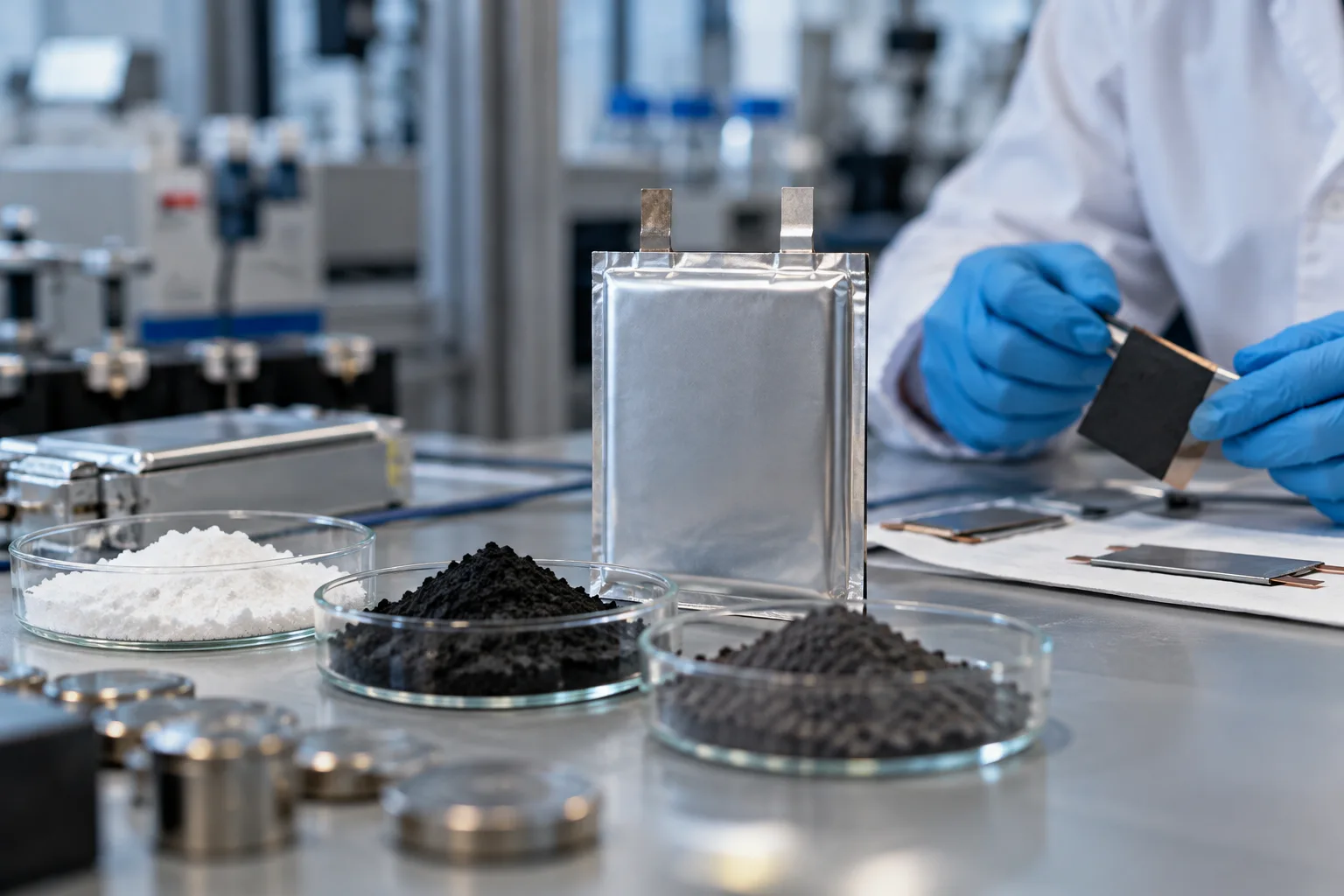
Researchers at UC San Diego and the University of Chicago built a sodium anode-free all-solid-state full cell in which sodium metal plates directly onto an aluminium current collector made of compressed aluminium particles. Using an electrochemically stable solid electrolyte and applied stack pressure, the cell showed stable cycling for several hundred cycles in laboratory tests.
Why it matters
Removing the anode reduces cell weight, volume and cost, and sodium is far more abundant than lithium. The work sets out design principles that could apply to other anode-free chemistries.
Caveats
- The cell relies on applied stack pressure, which adds engineering complexity for practical packs.
- Cycle life is reported as several hundred cycles in laboratory cells, well short of the thousands needed for many commercial uses.
- The university press release gives no measured energy density or cost figures.
Technology profiles
Sources
- peer reviewed paper
Design principles for enabling an anode-free sodium all-solid-state battery
Grayson Deysher, Jin An Sam Oh, Yu-Ting Chen et al.. Nature Energy, 3 Jul 2024. DOI: 10.1038/s41560-024-01569-9. - university press release
UChicago, UC San Diego labs create breakthrough new sodium-based battery
Paul Dailing. University of Chicago News, 29 Jul 2024.
Last reviewed 20 Oct 2026.