Battery-free wireless sensor monitors water permeation through implant encapsulation
What was demonstrated
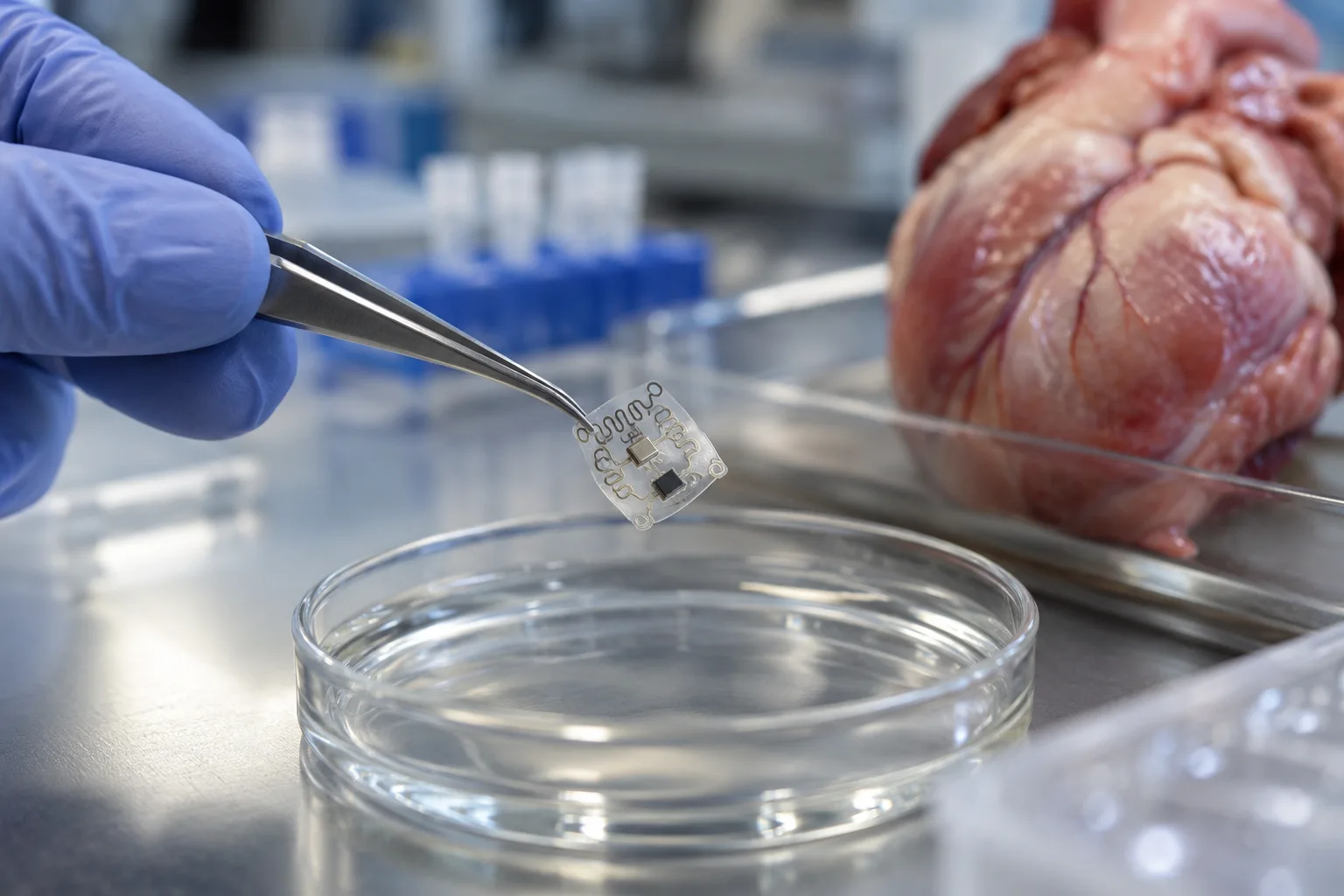
Researchers tested a flexible RF-backscatter platform using a magnesium resistive sensor to detect water permeation across thin-film encapsulation. Corrosion of the magnesium changed the circuit oscillation frequency. The study reports in-vitro and in-tissue characterisation, including implantation in deeply anaesthetised mice; the mouse implantation tests were performed after euthanasia, not in living animals.
Why it matters
The platform offers a way to monitor barrier performance in implantable bioelectronics without an onboard battery, using a sacrificial magnesium sensor element.
Caveats
- The platform is powered externally by an RF source, so “battery-free” does not mean energy-independent.
- The in-tissue animal experiment used euthanised mice and does not show chronic monitoring in living animals or patients.
- Signal strength decreases with implantation depth, and a sensor reports barrier behaviour only for the tested location and encapsulation configuration.
Technology profiles
Sources
- peer reviewed paper
Wireless, battery-free, and real-time monitoring of water permeation across thin-film encapsulation
Massimo Mariello, James Daniel Rosenthal, Francesco Cecchetti et al.. Nature Communications, 28 Aug 2024. DOI: 10.1038/s41467-024-51247-3.
Last reviewed 21 Oct 2026.