Millimetre-scale bioresorbable pacemaker is controlled by light and dissolves after use
What was demonstrated
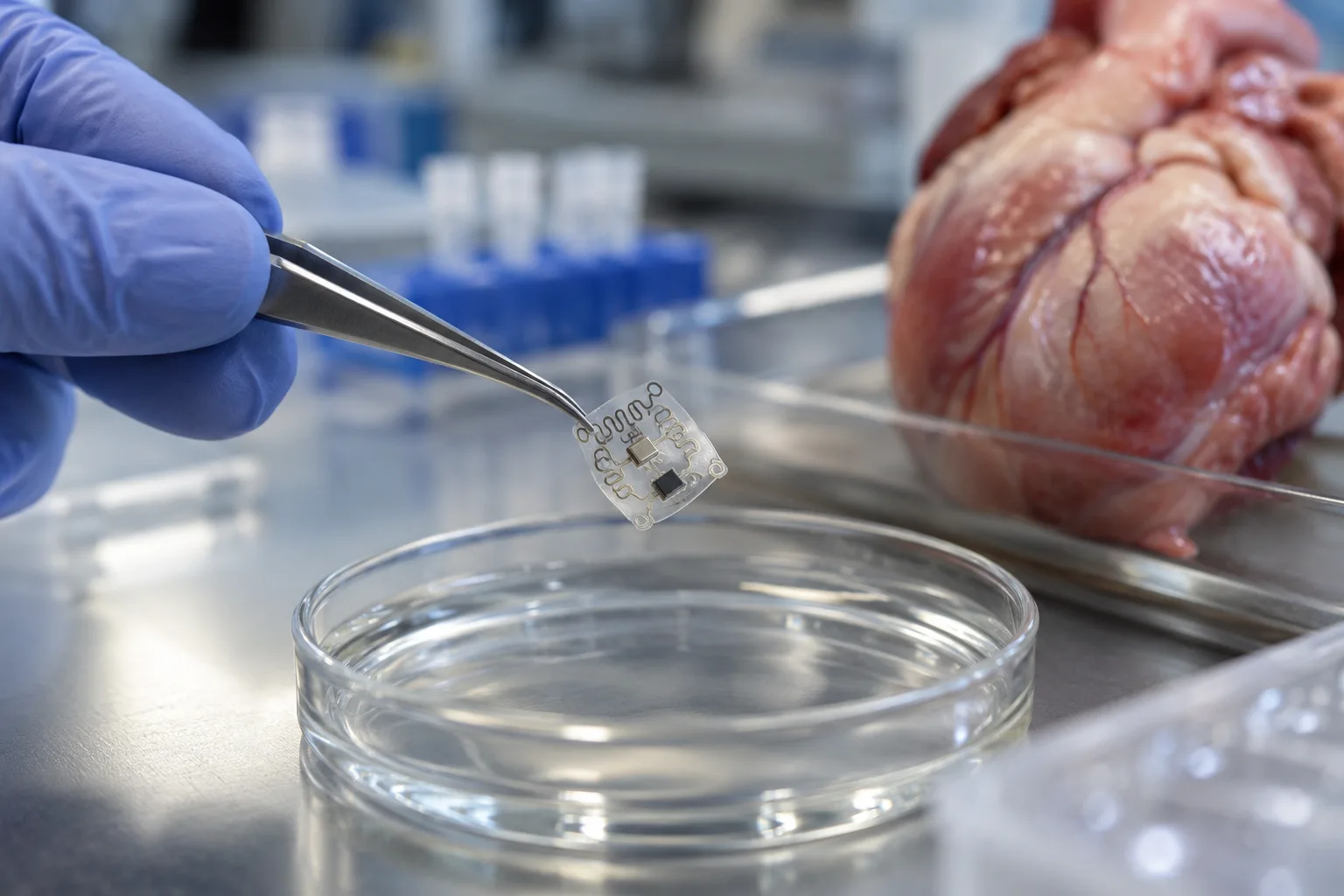
A team led by Northwestern University built a millimetre-scale bioresorbable optoelectronic pacemaker with an onboard power supply and wireless optical control, small enough for injection or endovascular delivery. The devices paced effectively in mouse, rat, pig, dog and human cardiac models at single and multiple sites. Paired with a skin-mounted wireless unit, they ran in closed loop, pacing on detection of arrhythmias.
Why it matters
Temporary pacing after heart surgery currently uses wires that must be removed. A device that can be injected and then dissolves could avoid removal surgery and its risks, particularly for children.
Caveats
- Human testing was on cardiac models (including donor hearts), not living patients.
- Long-term resorption behaviour and safety in humans need clinical trials.
- Pacing duration is limited by the onboard power source, which suits temporary rather than permanent pacing.
Technology profiles
Sources
- peer reviewed paper
Millimetre-scale bioresorbable optoelectronic systems for electrotherapy
Yamin Zhang, Eric Rytkin, Liangsong Zeng et al.. Nature, 2 Apr 2025. DOI: 10.1038/s41586-025-08726-4.
Last reviewed 20 Oct 2026.