Quantinuum Helios preprint reports averaged gate and state-preparation errors for a 98-qubit trapped-ion system
What was demonstrated
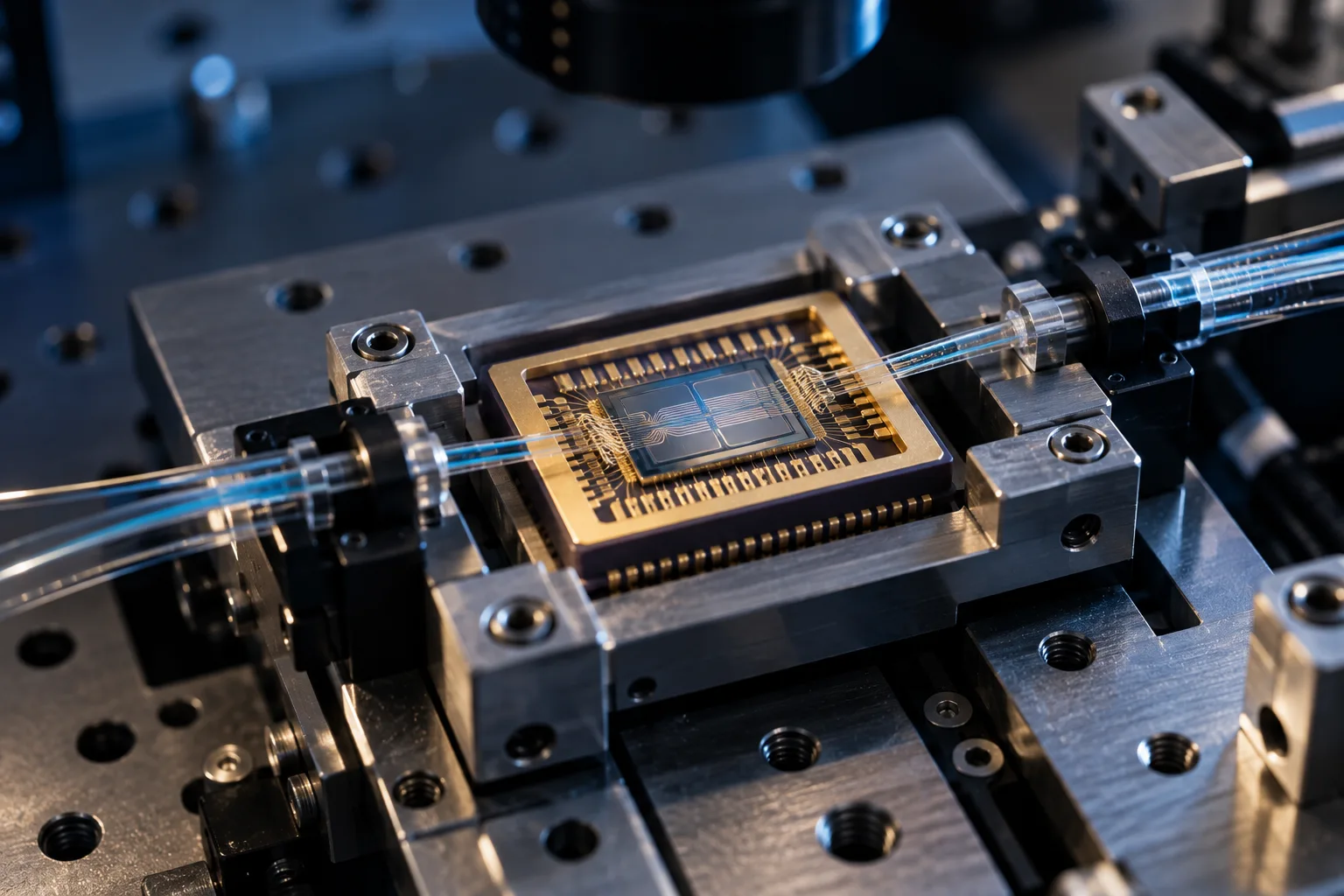
In an arXiv preprint, Quantinuum reports averaged error rates across all operational zones of its 98-qubit Helios trapped-ion system. The average infidelity was 2.5(1) × 10⁻⁵ for single-qubit gates, 7.9(2) × 10⁻⁴ for two-qubit gates and 4.8(6) × 10⁻⁴ for state preparation and measurement. The authors say these limits are not fundamental and could likely be improved. The authors also state that Helios operates well beyond the reach of classical simulation in random circuit sampling.
Why it matters
The authors say these component error rates predict system-level performance in random Clifford circuits and random circuit sampling. The figures are averages from a single company preprint, so they show what the authors measured rather than what has been independently reproduced.
Caveats
- The figures are averages across all operational zones. The abstract gives no per-qubit values, and the full paper was not reviewed for per-zone detail.
- This is an arXiv preprint (version 1, November 2025). No journal version could be checked, so the figures have not been independently reproduced.
- The abstract does not show whether these error rates hold as qubit numbers grow, and it gives no gate-speed figures.
- The claim of operation beyond classical simulation comes from the authors and has not been checked by an independent group.
Technology profiles
Sources
- preprint
Helios: A 98-qubit trapped-ion quantum computer
Anthony Ransford, M. S. Allman, Jake Arkinstall et al.. arXiv (quant-ph), 7 Nov 2025. DOI: 10.48550/arXiv.2511.05465.
Last reviewed 21 Oct 2026.