Heat-responsive gel electrolyte raises thermal-runaway onset in sodium-ion pouch cells
What was demonstrated
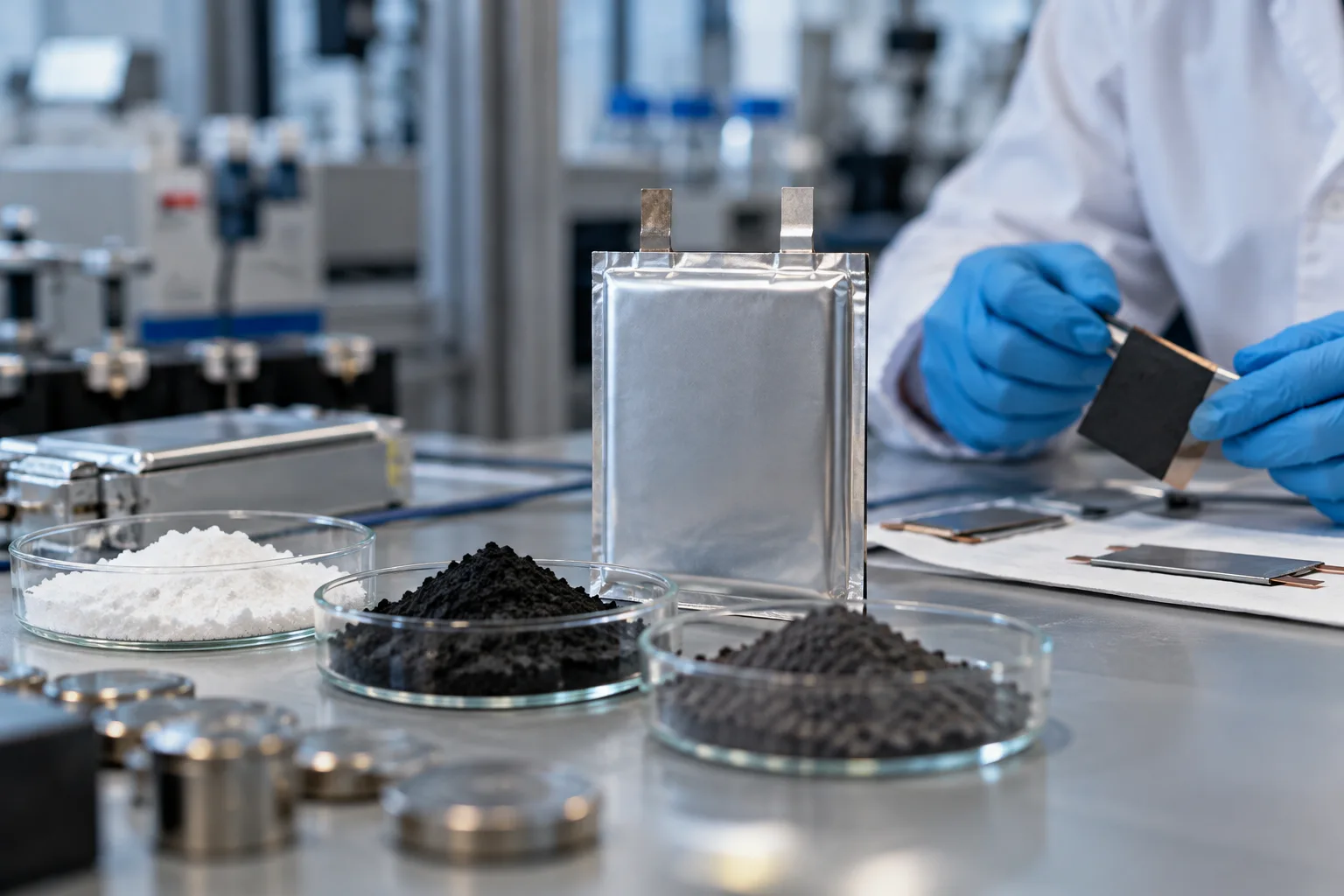
The researchers formed a smart gel polymer electrolyte in hard-carbon||NaNi1/3Fe1/3Mn1/3O2 sodium-ion cells. In the reported pouch-cell calorimetry, the thermal-runaway onset increased from 137.2 °C to 177.4 °C under the study protocol. A full cell with a 14 mg/cm2 positive-electrode mass loading retained 80% of capacity after 500 cycles at 50 °C. Above 120 °C, additional polymer crosslinking was designed to impede ion transport.
Why it matters
A temperature-triggered electrolyte response may add a material-level mechanism for limiting ion transport during overheating while supporting cycle life in a tested elevated-temperature full cell.
Caveats
- The calorimetry figures describe specific pouch-cell tests and do not establish safety under every abuse condition or remove fire and gas risks.
- The 500-cycle result is a laboratory full-cell result with a specified electrode loading; commercial pack performance, certification, cost and independent replication were not established.
- The electrolyte was polymerised in situ during cell manufacture, so process control and scale-up remain engineering questions.
Technology profiles
Sources
- peer reviewed paper
Smart gel polymer electrolytes enlightening high safety and long life sodium ion batteries
Li Du, Gaojie Xu, Chenghao Sun et al.. Nature Communications, 26 Mar 2025. DOI: 10.1038/s41467-025-57964-7.
Last reviewed 21 Oct 2026.