Bioresorbable metal-free magnet enables untethered organ monitoring in porcine models
What was demonstrated
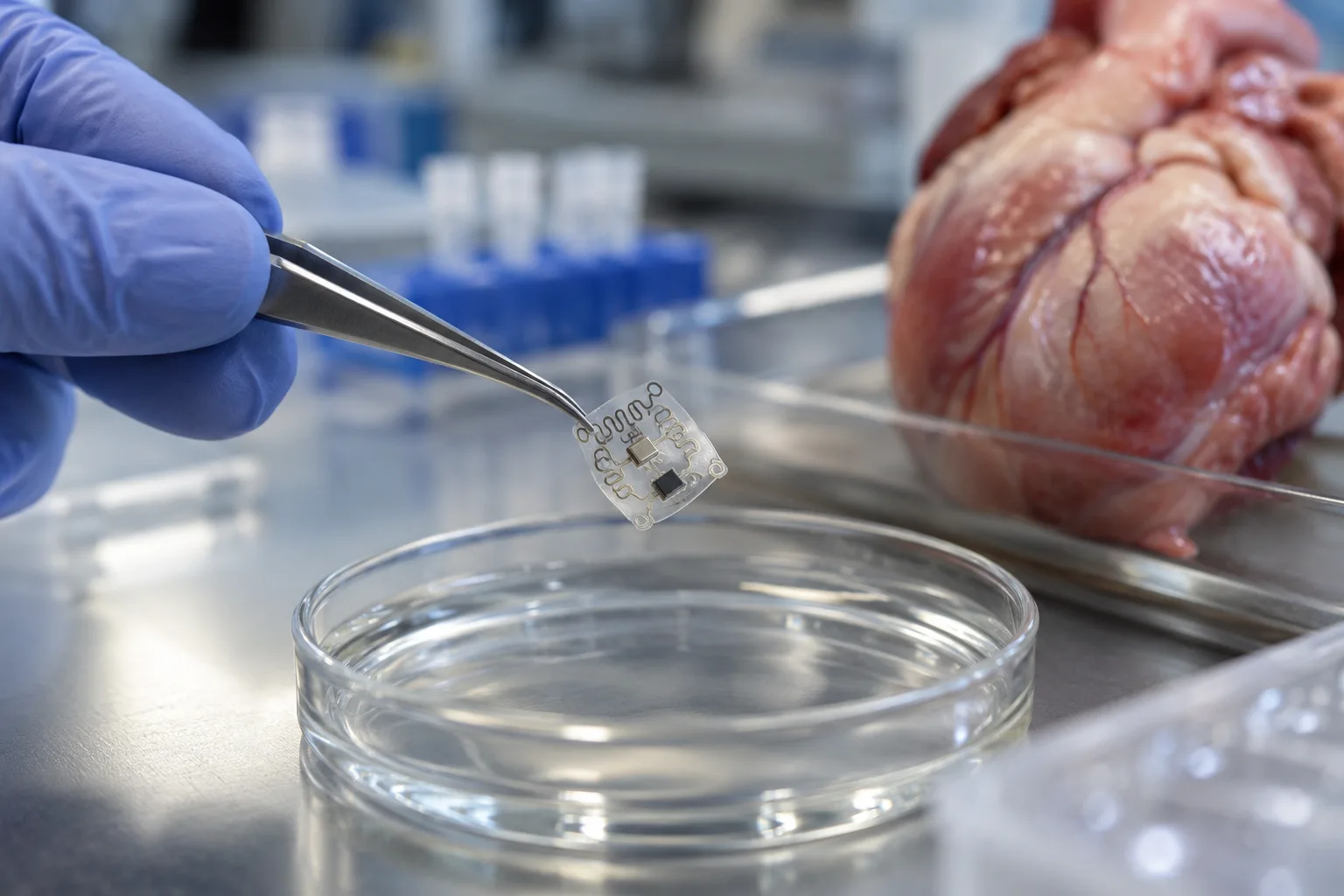
Researchers report a graphitic-carbon-nitride-derived metal-free molecular magnet integrated into catheter-deliverable epicardial patches and injectable hydrogels, coupled to a skin-interfaced Hall sensor array. In porcine models, the system continuously assessed cardiac ejection fraction for four weeks before the material underwent reported benign bioresorption. The abstract does not state the number of animals or detailed protocol.
Why it matters
A bioresorbable magnetic sensing material could support temporary organ monitoring without leaving a permanent magnetic implant, if the preclinical performance and resorption findings translate to humans.
Caveats
- Evidence is from porcine models, not human clinical use.
- The article abstract does not give animal sample size or enough protocol detail to assess performance independently; full text and supplementary methods need review.
- The authors' phrase “clinical-grade trajectories” does not establish clinical validation, regulatory clearance, or patient benefit.
Technology profiles
Sources
- peer reviewed paper
Bioresorbable metal-free molecular magnets enable untethered organ monitoring
Yizhang Wu, Zhang Yue, Sicheng Xing et al.. Nature Materials, 19 Oct 2026.
Last reviewed 21 Oct 2026.