How far away are we from restoring sight to blind people?
Some blind people now regain a measurable amount of vision, but only in narrow groups. An approved gene therapy treats one inherited cause of blindness. A retinal implant gave measurable central vision in a 38-person trial for people with geographic atrophy from age-related macular degeneration. Optogenetic and cortical approaches are at small-trial or early stage. None restores everyday sight across the main causes of blindness.
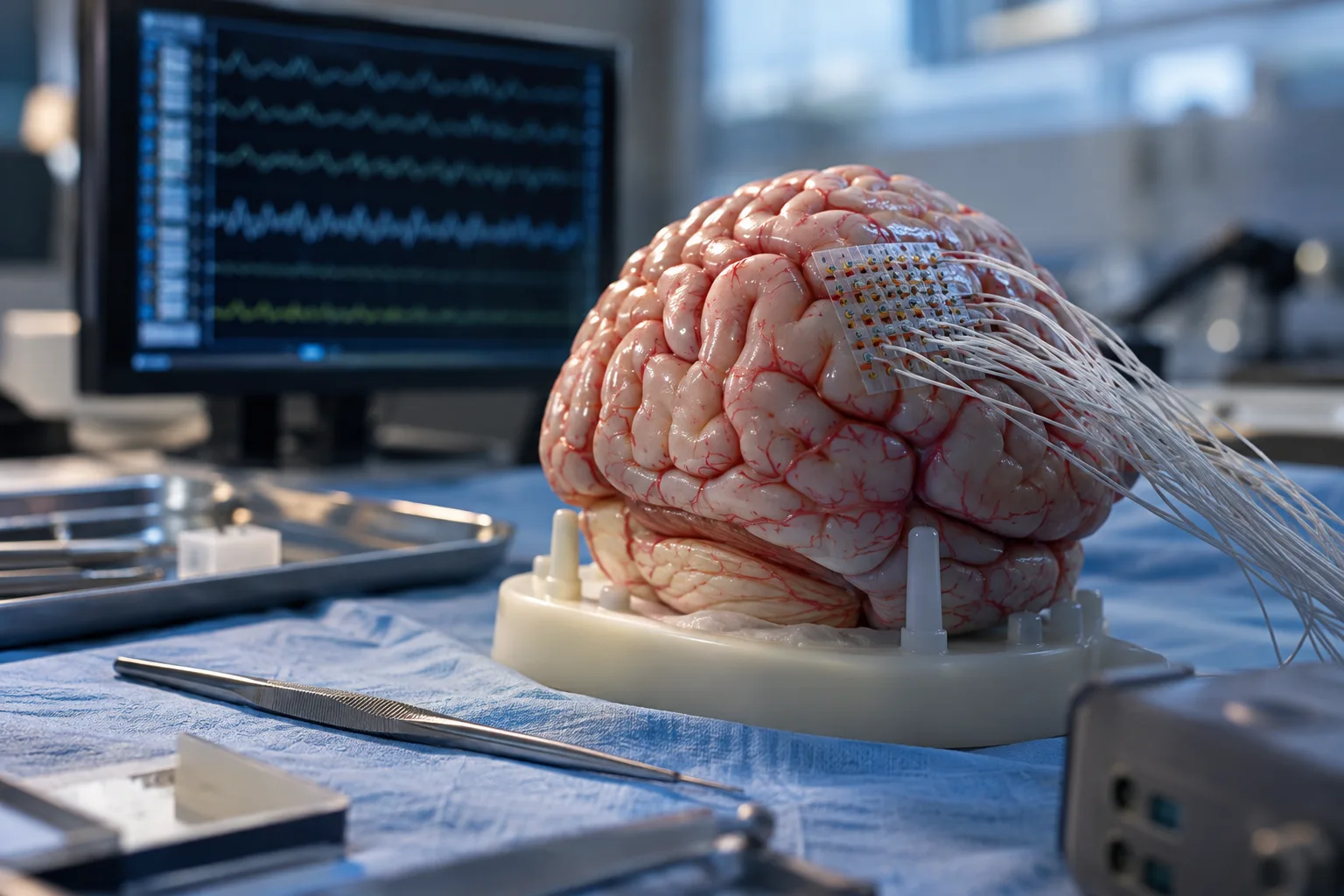
Close. Early pilots are running in the real world.
An approved gene therapy is in clinical use, but only for people with confirmed RPE65 mutations, an estimated 1,000 to 2,000 people in the US. The retinal implant and optogenetic therapies have shown measurable gains in trials of 38 and 27 people, and the cortical prosthesis in six. None is available as routine treatment for blindness from the main causes, and no marketing approval for the newer approaches was found in the sources reviewed. Pilot is the best fit.
The tech tree
Everything recorded on Vrulum that this future needs, oldest foundations at the top and the goal at the bottom. Lines show what each step requires.
- 2005OptogeneticsResearch and prototypes Being researched.
- 2011Retinal prostheses and vision restorationPilot and early commercial Unlocked.
- 2019Brain-computer interfacesPilot and early commercial Unlocked.
- 2017Gene therapy approved for one inherited retinal diseaseDone Unlocked.
- 2018Cortical visual prosthesis tested in a first-in-human studyDone Unlocked.
- 2021Optogenetic therapy gives partial vision in one patientDone Unlocked.
- 2025Retinal implant gives measurable central vision in a 38-person trialDone Unlocked.
- Date not recordedLarger optogenetic trial reports three-year follow-upIn progress Being researched.
- Date not recordedPivotal trial for a cortical visual prosthesisNot started Locked.
- Date not recordedMarketing approval for a retinal implant or optogenetic therapy beyond a single trialNot started Locked.
- Date not recordedRestored everyday sight across the main causes of blindnessNot started Locked.
- GoalRestoring sight to blind peopleGoalRequires: Retinal prostheses and vision restoration, Optogenetics, Brain-computer interfaces, Gene therapy approved for one inherited retinal disease, Retinal implant gives measurable central vision in a 38-person trial, Optogenetic therapy gives partial vision in one patient, Larger optogenetic trial reports three-year follow-up, Cortical visual prosthesis tested in a first-in-human study, Pivotal trial for a cortical visual prosthesis, Marketing approval for a retinal implant or optogenetic therapy beyond a single trial, Restored everyday sight across the main causes of blindness. Locked.
The road so far
4 of 8 steps done, 1 in progress.
- Done · 19 Dec 2017Gene therapy approved for one inherited retinal disease
The FDA approved Luxturna (voretigene neparvovec) for children and adults with confirmed biallelic RPE65 mutation-associated retinal dystrophy. Primary efficacy evidence came from a phase 3 study of 31 people, within a clinical programme of 41 people. The FDA estimates that 1,000 to 2,000 people in the US are affected. [3]
- Done · 20 Oct 2025Retinal implant gives measurable central vision in a 38-person trial
The PRIMA subretinal photovoltaic implant was tested in 38 people with geographic atrophy from age-related macular degeneration. Of the 32 who completed the study, 26 (81%) had a clinically meaningful gain in visual acuity of at least 0.2 logMAR at 12 months. The investigators estimated that about 80% of all 38 participants would meet the primary endpoint. [1][2]
- Done · 25 May 2021Optogenetic therapy gives partial vision in one patient
A Nature Medicine report described one blind person with retinitis pigmentosa who regained partial vision only while wearing goggles. The patient touched a large notebook in 36 of 39 evaluations. This was a proof of concept in one person, not a trial result. [5]
- In progressLarger optogenetic trial reports three-year follow-up
Nanoscope Therapeutics' MCO-010 (sonpiretigene isteparvovec) was tested in the RESTORE trial (NCT04945772) in retinitis pigmentosa, with 27 people across high-dose, low-dose and sham arms. Three-year follow-up presented at ASRS 2026 reported that the roughly three ETDRS-line benefit was sustained, with no treatment-related serious adverse events. The report gives no per-arm patient counts, and a biologics licence application is reported as underway. [4]
- Done · 2018Cortical visual prosthesis tested in a first-in-human study
The Orion cortical visual prosthesis enrolled six people in a first-in-human feasibility study between 2018 and 2019. Six-year results reported in February 2026 found that fewer than 4% of electrodes had lost function, and every participant scored mildly positive or positive on observer-rated vision assessments. One serious adverse event, a seizure early in the study, was managed by adjusting stimulation. [6]
- Not startedPivotal trial for a cortical visual prosthesis
Cortigent plans to advance the Orion system in 2026 and aims to run a larger pivotal trial, working with experts and the FDA. The sources reviewed do not show that this trial has started. [6]
- Not startedMarketing approval for a retinal implant or optogenetic therapy beyond a single trial
The sources reviewed report no marketing approval for PRIMA or for an optogenetic therapy. Argus II, an earlier retinal implant, was approved by the FDA in 2013 but has since been discontinued. [6]
- Not startedRestored everyday sight across the main causes of blindness
No approach reviewed restores normal or everyday sight for the main causes of blindness. Each one depends on a specific cause and on part of the eye or nerve pathway still working.
Why it matters
Sight loss affects many people, and these approaches show that a visual signal can be restored in some cases. The next results will decide which people can be treated, how devices are tested, and whether the field moves from small trials to routine care.
What stands in the way
- The approved gene therapy applies only to RPE65 disease, and the newer approaches depend on specific parts of the retina or visual pathway still working, so many blind people would not be eligible.
- Trials are very small: 38 people for PRIMA, 27 for RESTORE and six for Orion, and the optogenetic report described one person.
- The PRIMA primary endpoint measures a gain in visual acuity, which does not on its own show everyday function such as reading or mobility.
- Retinal implants need surgery beneath the retina. The PRIMA trial recorded 26 adverse events in 19 participants.
Signals to watch
- Full peer-reviewed publication of the RESTORE results and a regulatory decision on the biologics licence application.
- A pivotal trial starting for the Orion cortical visual prosthesis or another cortical device.
- Trials that measure reading, mobility or quality of life, not only acuity charts.
- Longer follow-up of PRIMA on durability and serious adverse events.
- A regulatory decision on a retinal implant or optogenetic therapy in any jurisdiction.
Sources
- peer reviewed paper
Subretinal Photovoltaic Implant to Restore Vision in Geographic Atrophy Due to AMD
Frank G. Holz, Yannick Le Mer, Mahiul M.K. Muqit et al.. New England Journal of Medicine, 20 Oct 2025. - news
Retinal implant restores vision in geographic atrophy
Review of Optometry, 23 Oct 2025. - news
FDA approves Luxturna for inherited retinal dystrophy
Healio, 19 Dec 2017. - news
ASRS 2026: MCO-010 optogenetic therapy sustains 3-line vision gains at 3 years in retinitis pigmentosa
Ophthalmology Times, 20 Jul 2026. - news
Blind patient achieves partial vision through gene therapy
Ophthalmology Times, 25 May 2021. - news
Vendors Report Progress with Cortical Visual Prosthetics
Jeremy Koff. Neurotech Reports, 28 Feb 2026.
Last reviewed 21 Oct 2026.