Elastocaloric cooling
Also known as Elastocaloric refrigeration, Solid-state cooling with shape-memory alloys, Stress-driven caloric cooling
Elastocaloric cooling uses mechanical stress to make a shape-memory material warm and cool as its crystal structure changes. Laboratory systems have produced continuous cold air, kilowatt-scale cooling at zero temperature lift, and a small heat-driven device. The results are promising engineering demonstrations, but efficiency, fatigue life, system cost and performance under useful operating conditions remain open questions.
Research and prototypesDemonstratedReviewed 22 Oct 2026
In plain language
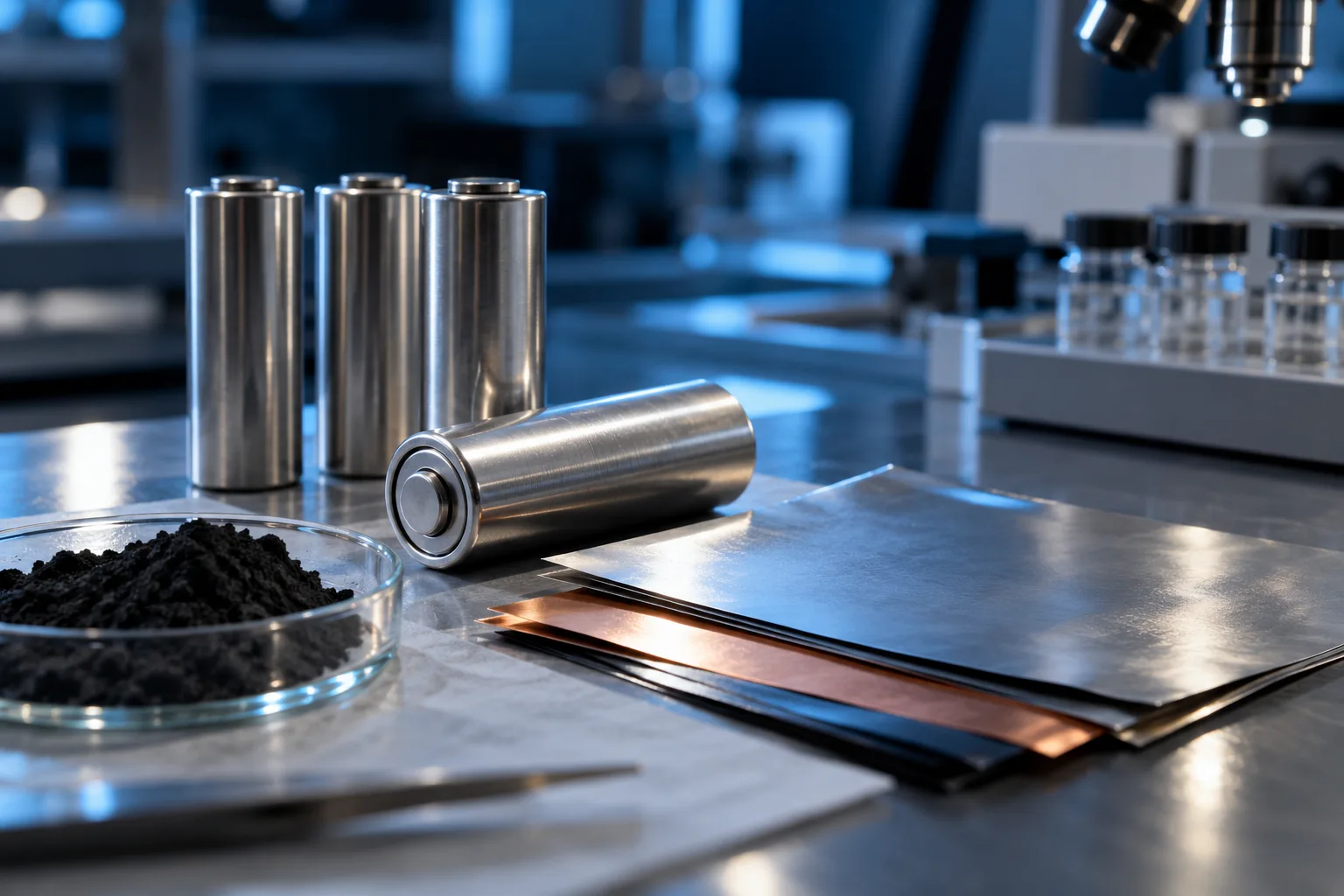
Most refrigerators and air conditioners move heat using a compressor and a circulating fluid that evaporates and condenses. Elastocaloric cooling takes a different route: it repeatedly loads and unloads a solid material, usually a nickel-titanium shape-memory alloy. The material releases heat when stress drives a change in its crystal structure and absorbs heat when that change reverses. A machine must move the heat from the cold side to the warm side while repeatedly applying large forces.
Researchers have demonstrated several arrangements, including a wire-bending air cooler, a kilowatt-scale multi-cell machine, and a film-based system driven by heat. These are prototypes tested under particular laboratory conditions. They do not establish that elastocaloric units outperform conventional refrigeration across a full appliance lifetime or are ready for general sale.
Technical explanation
NiTi shape-memory alloys can transform between austenite and martensite when temperature and stress change. Loading and unloading the material can release and absorb latent heat, creating a reversible temperature response. A useful cooling device must coordinate that response with heat exchange between a cold and a warm side.\n\nAn active regenerator typically combines shaped NiTi refrigerant, heat-transfer fluid, an actuator and flow controls. Thin geometries improve heat exchange but can increase manufacturing difficulty, stress concentration and fatigue risk. Actuators and supporting frames must deliver repeated loads while recovering work and limiting losses.\n\nReported device metrics are not interchangeable. Adiabatic sample temperature change, device temperature lift, cooling power, specific cooling power and COP describe different properties. COP comparisons also depend on whether they include all pumps, actuators, controls and heat exchangers. The long-form article below explains these boundaries and the current evidence.
What the evidence says
Each statement is typed by the strength of its evidence and linked to the source that supports it.
Demonstrated Shown in a published experiment, test or shipping product.
A coil-bending NiTi prototype reported continuous cold outlet air with a 10.6 K temperature drop, specific cooling power of 2.5 W/g and COP of 3.7 based on rotational mechanical power.
Sources: [1] · AbstractA multi-cell NiTi prototype reported 1,284 W cooling power at zero temperature lift during its first 500,000 cycles; reported output at the same condition declined to 762 W after two million cycles.
Sources: [2] · Abstract; Results, Fig. 4 and Supplementary Fig. 13The 2025 multi-cell prototype cooled a 2.7 m³ model room to about 21–22 °C within 15 minutes when outdoor temperature was about 30–31 °C.
Sources: [2] · Results, Application and comparison, Fig. 4A heat-driven shape-memory film prototype reported device-level temperature spans of 4.0 K under Joule-heated actuation and 2.2 K with an external heat source.
Sources: [3] · AbstractA 3D-printed NiTi material study reported three million compression cycles without fracture and a 20 °C temperature span in a prototype using printed refrigerant.
Sources: [4] · AbstractA 2026 elastocaloric drive-system study reported about 70% mechanical-level work-recovery efficiency at a stated test force; this is not a whole-system cooling efficiency measurement.
Sources: [5] · Abstract · medium confidenceLimitations and open problems
- Peak cooling power, maximum temperature lift and best efficiency are measured at different operating points in many prototypes; they cannot be treated as simultaneous product performance.
- Actuators and frames must apply high repeated forces, and drive losses can reduce whole-system efficiency.
- Heat transfer, fluid pressure drop, cycle frequency and mechanical loading must be balanced in the regenerator.
- Functional fatigue can reduce cooling output before visible fracture; material cycle tests do not establish appliance lifetime.
- Laboratory systems have not yet established competitive whole-system efficiency, cost and maintenance under matched commercial operating conditions.
- Avoiding a vapour-compression refrigerant loop does not by itself establish a lower life-cycle climate impact; electricity, materials, manufacture, lifetime and end-of-life recovery matter.
Possible future uses
Speculative
Ideas, not predictions. None of these has been demonstrated.
- Building air-conditioning or heat-pump systems if full units can meet required cooling loads, efficiency, lifetime and installed cost.
- Compact refrigeration or beverage cooling where a solid refrigerant or distinct mechanical design offers a measurable product advantage.
- Cooling driven partly by available waste heat or solar thermal energy, including possible off-grid cold storage.
- Thermal management for electronics or other equipment requiring localised cooling.
Timeline
- 2 Dec 2023A coil-bending NiTi prototype demonstrates continuous cold air, reporting a 10.6 K outlet-air temperature drop and a system COP of 3.7 based on rotational mechanical power. Sources: [1]
- 26 Feb 2025A multi-cell NiTi prototype reports 1,284 W cooling power at zero temperature lift in early-cycle testing and cools a small model room. Sources: [2]
- 27 Apr 2026A 3D-printed NiTi study reports three million compression cycles without fracture in material tests and a 20 °C temperature span in a cooling prototype. Sources: [4]
- 28 Aug 2026A film-based elastocaloric prototype demonstrates heat-driven actuation and reports a 2.2 K device-level temperature span with an external heat source. Sources: [3]
Futures this could help bring about
Glossary
- Adiabatic temperature change
- Temperature change measured when little heat enters or leaves the sample during a process.
- Austenite
- One of the crystal structures that a shape-memory alloy can adopt.
- Coefficient of performance (COP)
- Cooling or heating delivered divided by the input energy included within a stated system boundary.
- Elastocaloric effect
- A reversible temperature response caused by mechanical stress changing a material's internal state.
- Functional fatigue
- Loss or change in a material's useful response during repeated cycling, even if it has not fractured.
- Martensite
- A crystal structure in a shape-memory alloy that can form or reverse under changes in stress and temperature.
- Regenerator
- A heat-exchange structure that stores and transfers heat between stages of a repeated cooling cycle.
- Temperature lift
- The temperature difference a cooling system maintains between its warm and cold sides.
- Zero temperature lift
- A test condition where the warm and cold sides are at the same temperature; useful for measuring capacity but not representative of ordinary cooling service.
Can shape-memory alloys cool buildings without conventional refrigerants?
Cooling by squeezing a solid
DemonstratedElastocaloric cooling is a solid-state refrigeration approach. Rather than relying on a compressor to circulate a refrigerant through evaporation and condensation, an elastocaloric device repeatedly stresses and releases a solid material. The solid changes temperature as its crystal structure changes. If the cycle is arranged correctly, it can absorb heat from a cold side and reject it to a warmer side. The best-known material family is nickel-titanium shape-memory alloys, often called NiTi or nitinol. Towards practical elastocaloric cooling, 2023.
The central idea is simple to sketch, but a functioning refrigerator is a coupled thermal and mechanical machine. It needs a material that changes temperature reversibly, a mechanism that applies force and recovers work, a way to transfer heat into and out of the material, and controls that coordinate the cycle. A material can show a large temperature jump in a laboratory test while the assembled device removes little heat or requires excessive input power.
Several research groups have now built devices rather than only measuring small samples. Reported achievements include continuous cooled air, a kilowatt-scale apparatus, a small model-room demonstration, a heat-driven film prototype and an additively manufactured refrigerant. These results mark engineering progress. They are not a demonstration that an elastocaloric appliance is already more efficient, less costly or longer lasting than modern refrigeration.
How the material changes temperature
DemonstratedA shape-memory alloy can transform between different crystal structures as temperature and mechanical stress change. In NiTi, one structure is called austenite and the other martensite. When stress pushes the material through a reversible transformation, latent heat is released or absorbed. If the sample is loaded quickly while insulated from its surroundings, the released heat raises its temperature. If the load is then removed, the reverse transformation can absorb heat and cool the sample. The effect depends on alloy composition, heat treatment, initial temperature, stress and the loading path. Zhong et al., 2026.
That sample-level temperature change is often called an adiabatic temperature change. It is not the same as the temperature lift across a complete cooling machine. A device must transfer heat in the right sequence and keep a temperature gradient between its cold and warm sides. Its ability to do so depends on the refrigerant geometry, heat-transfer rate, fluid flow, actuator cycle and external load.
The loading and unloading paths do not perfectly retrace one another. This hysteresis is a source of energy loss. Some mechanical work is dissipated instead of being recovered, and material properties can drift during repeated cycles. High stress can drive a substantial transformation but also raise forces, wear and fatigue. A useful refrigerant therefore needs a balance between temperature change, required stress, thermal conductivity, work loss and lifetime.
Elastocaloric is one member of a wider family of caloric effects. Magnetocaloric materials respond to magnetic fields, electrocaloric materials respond to electric fields, and barocaloric materials respond to pressure. These effects can all be used in solid-state cooling concepts, but the materials, actuators, device architectures and maturity of each family differ. Results from one should not be treated as evidence for another.
The regenerator: where the cycle becomes a refrigerator
DemonstratedA practical elastocaloric machine often uses an active regenerator. The refrigerant is made into wires, tubes, plates or another shape that exposes a large surface to a heat-transfer fluid. The material is loaded and unloaded in sequence while the fluid moves through it. Repeated heat exchange can build a temperature gradient along the regenerator: one end becomes cold and the other warm. The fluid then carries heat from the cold region towards the warm sink as the machine cycles.
The regenerator has competing design needs. Thin parts can exchange heat quickly because they expose more surface area, but they may be harder to manufacture and can fatigue. Narrow fluid passages increase surface area but can also make pumping harder. Fast cycling can raise cooling power but leave less time for heat exchange and increase mechanical wear. These trade-offs help explain why maximum material performance does not automatically translate into a better device. Zhou et al., 2025.
Many prototypes use water or another fluid to move heat even though the refrigerant itself is solid. Solid-state cooling therefore does not always mean that the whole machine is fluid-free. It means that the working refrigerant can be a solid material and need not circulate through a vapour-compression loop. Pumps, valves, motors, seals and heat exchangers may still be required.
The phrase ‘regeneration’ refers to reusing the temperature gradient within the material and fluid flow so that successive parts of the cycle move heat progressively. It is a core system function, not a minor detail. Poor regeneration can erase gains made by a strong elastocaloric response because much of the sample's temperature change is lost before it can contribute to useful cooling.
Different ways to apply the force
DemonstratedAn elastocaloric machine must load and unload the refrigerant repeatedly. Linear systems can pull wires or compress tubes. Rotary systems can move material through repeating zones. Bending can spread strain over a curved path and may reduce the peak force required for some geometries. Hydraulic actuators can generate large forces, while motors, screws, cams and linkages can provide precise motion. Every mechanism brings its own mass, energy use, friction, control needs and maintenance burden.
A 2023 study by Li, Hua and Sun used coil-bending of NiTi ribbons and wires to produce continuous cold outlet air. The reported air temperature drop was 10.6 kelvin, specific cooling power was 2.5 watts per gram, and the system coefficient of performance was 3.7 when defined against rotational mechanical power. The authors reported a specific driving force of 26 newtons per gram. This was a laboratory air-cooling prototype; the result should be read with its chosen system boundary and not compared directly with a commercial air-conditioner rating. Li et al., 2023.
The system COP reported in one paper may exclude components included in another study. For a product comparison, the energy used by the actuator, pump, control electronics and any auxiliary equipment should be included consistently. The cooling load and temperature lift should also be comparable. A COP without a clear boundary is not enough to establish a product-level efficiency advantage.
Mechanical work can sometimes be recovered during unloading. A 2026 drive-system study reported about 70 percent mechanical-level work recovery at a particular operating force, while modelling explored higher values for modified configurations. The measured result is an actuator-system metric. It does not give the complete cooling COP or prove that the whole refrigerator outperforms a compressor-based system. Žerovnik et al., 2026.
From air streams to a kilowatt-scale prototype
DemonstratedIn 2025, Zhou and colleagues reported a multi-cell system containing thin-walled NiTi tubes. The device arranged elastocaloric cells mechanically in series and gave each cell a parallel fluid pathway, an architecture intended to combine a large active mass with manageable fluid pressure. The machine used 104.4 grams of NiTi and graphene nanofluid as its heat-transfer fluid. It operated under compressive stress and cycled at 3.5 hertz. Zhou et al., 2025.
The paper reported 1,284 watts of cooling power at zero temperature lift during the initial 500,000 cycles. After two million cycles, cooling power under that test condition had fallen to 762 watts. The authors also described an outdoor model-room demonstration: a 2.7-cubic-metre room was cooled to about 21–22 degrees Celsius while the outdoor temperature was about 30–31 degrees, reaching that indoor range within 15 minutes. The authors note that the maximum cooling power and maximum temperature lift were obtained at different conditions.
The kilowatt figure is important because earlier elastocaloric prototypes had lower cooling power. Yet zero lift means that the warm and cold sides are at the same temperature. It is a useful measurement boundary for a device map, but it does not describe a unit delivering cooling while maintaining a room below outdoor temperature. A product needs a reported capacity at a useful temperature lift, a full-system energy balance and a stable long-term output. The model-room experiment is an integrated demonstration, but the small, insulated test room is not a standard residential building or a market-ready product.
The change in reported output after repeated cycles is also instructive. A peak measurement says little about how much cooling remains after extended use. Performance may decline before a material breaks, and a device can lose capacity through either material changes or component wear. Testing should therefore report performance over time, not just a best value from an early run.
Heat-driven cooling and additive manufacturing
DemonstratedAn elastocaloric system usually needs a powered actuator to load the refrigerant. In 2026, Hsiau and colleagues demonstrated a film device in which a heat-responsive shape-memory actuator drives a second shape-memory film that acts as the refrigerant. The result was an early demonstration that heat can supply some of the mechanical work in an elastocaloric cooling cycle. Hsiau et al., 2026.
With Joule-heated actuation at 86 degrees Celsius, the authors reported a 12.9 kelvin span at the refrigerant-film level and a 4.0 kelvin span at the device level. When an external heat source drove the system, the device-level temperature span was 2.2 kelvin. These measurements are reported at different system levels and under different drive conditions. They should not be presented as one combined performance figure.
The heat-driven concept could be relevant where waste heat or solar thermal heat is available at a suitable temperature. It does not establish a self-sufficient cooler. A useful system must deliver enough heat-driven motion at the required rate, manage the hot and cold streams and limit auxiliary electricity. Off-grid vaccine storage or waste-heat-powered cooling remain potential applications, not proven use cases.
Manufacturing the refrigerant in a useful geometry is another challenge. In 2026, Zhong and colleagues reported 3D-printed NiTi alloys that retained elastocaloric response for three million compression cycles without fracture in their material tests. They reported a maximum specific temperature change of 33.6 degrees Celsius per gigapascal of driving stress and a 20-degree temperature span in a cooling prototype using printed refrigerant. The results address a durability-performance trade-off for that material design; they do not establish long-term service life for an appliance. Zhong et al., 2026.
How to read the numbers
Cooling power, temperature span, specific cooling power and coefficient of performance answer different questions. Cooling power is the rate at which heat is removed. Temperature span describes a temperature difference across the system. Specific cooling power divides output by the mass of active refrigerant, which can be useful for comparing materials but does not include the frame, actuator, pump, valves, controls, housing or heat exchangers. COP compares cooling output with an input-energy boundary that needs to be stated.
A maximum temperature span is often measured with little or no cooling load. Maximum cooling power may occur when the temperature lift is zero. Those two maxima do not usually happen at the same point on the device's performance map. The 2025 multi-cell paper explicitly states that its maximum cooling power and maximum temperature lift were not achieved simultaneously. Reporting both without the test conditions could mislead readers into thinking one operating point achieved both.
For a fair comparison with a modern air conditioner or refrigerator, measurements should match the cooling service: ambient conditions, target temperature, cooling load, duty cycle and seasonal operation. They should also count all energy used by the complete system. A material-level result or a COP calculated from mechanical drive power alone cannot establish whole-appliance efficiency.
Cycle counts also need context. A material sample tested for millions of compressions is not the same as a complete machine operating for years. The test protocol, stress, temperature, cycle frequency, pauses and performance checks matter. Functional fatigue can reduce the temperature response or raise hysteresis even if the sample does not fracture.
The main barriers to practical equipment
Force and drive losses are central. Elastocaloric transformations can require high stress, so an actuator and structural frame may need to withstand large repeated loads. The frame adds size and mass. Motors, pumps and hydraulic circuits consume energy, and only some work may be recovered during unloading. A practical design needs a reliable, efficient and affordable drive, not only a high-performing alloy.
Heat transfer creates another trade-off. Thin geometries expose a large surface area but can be difficult to manufacture and mechanically support. Fluid channels that improve exchange can create pressure drop and increase pumping power. The heat exchanger must move energy in synchrony with the loading cycle without overheating or starving the refrigerant of flow.
Fatigue is both a materials and a product problem. Repeated transformations can leave residual strain, change hysteresis, alter transformation temperatures or initiate cracks. Compression, tension and bending place different demands on the material. A 3D-printed alloy that survives millions of controlled cycles is a promising materials result, but field durability also depends on cycling frequency, thermal ageing, shock, corrosion, seals, bearings, valves and maintenance.
Cost and manufacturing repeatability are unresolved. NiTi composition and heat treatment affect the transformation temperature and fatigue response. Conventional processing can involve multiple treatments and machining steps. Additive manufacturing could make complex shapes with less material removal, yet it needs reliable control of defects, microstructure and post-processing. The cost of the actuator, frame, fluid circuit and installation must be counted alongside the alloy.
Research on practical elastocaloric systems identifies reliability, ease of maintenance, work recovery, heat exchange and cost as major requirements, in addition to performance. These are not afterthoughts: they determine whether a laboratory cycle can become equipment that can be serviced and trusted. Wang et al., 2023.
Environmental promise requires a system comparison
A solid refrigerant could avoid direct emissions from leakage of a high-global-warming-potential working refrigerant if it replaces a vapour-compression unit. That is a potential advantage, not a complete environmental assessment. Elastocaloric machines may still contain heat-transfer fluids and require electricity for motion, pumping and control. Their climate impact depends on efficiency, material production, manufacturing yield, lifetime, maintenance and recycling.
If the alternative consumes more electricity for the same cooling service, power-sector emissions could offset a reduction in refrigerant leakage. A full comparison should evaluate energy use over matched operating conditions and include equipment manufacture and end of life. The studies described here demonstrate cooling effects and prototypes; they do not establish a life-cycle climate advantage across commercial products.
The reference technology should be specified. Modern vapour-compression systems differ in compressor efficiency, refrigerant, heat exchanger, controls and application. Comparing a laboratory mechanical COP against a seasonal appliance rating would mix unlike measures. An independent, application-specific test is needed before claims about lower energy use or climate impact are justified.
Where researchers hope to use it
SpeculativeBuilding cooling and heat pumps are potential targets because they need significant cooling or heating capacity and depend on installed mechanical equipment. The 2023 air-cooling prototype and 2025 model-room test show device-level interaction with air flows and a small room. Neither test establishes a field-ready system for occupied buildings. Useful evidence would include seasonal energy use, capacity across outdoor temperatures, humidity management, acoustics, uptime, maintenance and installed cost.
Small refrigerators, beverage coolers and localised electronics cooling are also discussed as possible niches. Whether these applications suit elastocaloric devices depends on the size and weight of the actuator, required duty cycle, cooling temperature, acceptable noise and lifetime. A solid refrigerant alone does not guarantee a smaller or simpler product.
Heat-driven cooling could use waste heat from industrial processes or solar thermal collectors to reduce electric drive requirements. The 2026 film experiment supports the feasibility of heat-driven actuation in a small prototype. A real installation would need an available heat source at a suitable temperature, a dependable cycle, enough cooling capacity and a measured whole-system energy balance. These are design possibilities, not forecasts.
The same materials can release heat as well as absorb it, so heat-pump operation is possible in principle. But evidence for a cooling prototype does not establish a market-ready reversible heat pump. Heating and cooling have different temperature targets, operating patterns and performance requirements.
What evidence should come next
The most useful device reports will provide full performance maps, not only record points. They should show cooling power across temperature lift and load, distinguish no-load temperature span from loaded operation, and state the energy used by the actuator, pump, controls and heat rejection system. Results should be replicated and independently measured where possible.
Long-duration work should track both breakage and gradual performance loss. Tests should state whether cycles refer to a material coupon, a regenerator cell or an assembled unit. Application trials should include start-stop operation, thermal ageing, maintenance, noise, leakage and reliability of supporting components. A high cycle count is useful evidence, but it is not equivalent to a full product lifetime.
Manufacturing data should include batch consistency, defect rates, post-processing, material yield, cost and repeatable transformation properties. If a design depends on a specialised fluid, the study should explain its stability, pumping needs, compatibility and disposal. Those data help determine whether a performance result can be reproduced outside the laboratory.
Finally, each prototype should be tested against a modern alternative in its intended application. A room cooler needs building-relevant loads and seasonal data. A refrigerator needs a defined volume, ambient temperature, pull-down time, hold temperature and energy use. A heat-driven system needs the temperature and availability of its heat source. Only then can buyers and researchers judge whether the new mechanism solves a real problem.
Assessment
Elastocaloric cooling has moved beyond isolated material measurements. Research teams have built devices that deliver continuous cold air, reach kilowatt-scale cooling power under a zero-lift condition, cool a small model room, use heat to drive a film-based cycle and demonstrate promising fatigue behaviour in 3D-printed NiTi. These are substantial engineering milestones.
The evidence still describes research prototypes, not a broadly available alternative to conventional cooling. Efficiency, useful temperature lift, durability, cost and system complexity are linked. Different experiments report different best-case operating points, and those results should not be combined into a hypothetical machine that no study has tested.
The key question is whether a complete unit can provide application-grade cooling at competitive whole-system efficiency and maintain that performance for a commercially relevant service life. Answering it will require transparent, repeatable device tests and manufacturing data, rather than larger material-level numbers alone.
Sources
- peer reviewed paper
Continuous and efficient elastocaloric air cooling by coil-bending
Xueshi Li, Peng Hua, Qingping Sun. Nature Communications, 2 Dec 2023. DOI: 10.1038/s41467-023-43611-6. Accessed 22 Oct 2026. - peer reviewed paper
Achieving kilowatt-scale elastocaloric cooling by a multi-cell architecture
Guoan Zhou, Lingyun Zhang, Zexi Li et al.. Nature, 26 Feb 2025. DOI: 10.1038/s41586-024-08549-9. Accessed 22 Oct 2026. - peer reviewed paper
Heat-driven elastocaloric cooling with shape memory films
Yi-Ting Hsiau, Shuichi Miyazaki, Manfred Kohl et al.. Nature Energy; Karlsruhe Institute of Technology KITopen repository, 28 Aug 2026. DOI: 10.1038/s41560-026-02122-6. Accessed 22 Oct 2026. - peer reviewed paper
3D-printed NiTi alloys for elastocaloric cooling
Shiyu Zhong, Hongyang Lin, Yang Li et al.. Nature Communications, 27 Apr 2026. DOI: 10.1038/s41467-026-71399-8. Accessed 22 Oct 2026. - peer reviewed paper
Efficient elastocaloric drive system enabled by constant-torque and work-recovery design
Andrej Žerovnik, Stefano Dall’Olio, Simon Krašna et al.. Nature Communications, 15 May 2026. DOI: 10.1038/s41467-026-73314-7. Accessed 22 Oct 2026. - review article
Towards practical elastocaloric cooling
Yong Wang, Shengnan Qian, Jun Cui et al.. Communications Engineering, 16 Aug 2023. DOI: 10.1038/s44172-023-00129-5. Accessed 22 Oct 2026.
Revision history
2 changes since this profile was created.
Changes on 22 Oct 2026
Published on owner instruction.194c69a
Created a sourced long-form technology profile covering elastocaloric cooling prototypes, performance boundaries and barriers.3745aa0