CRESt platform screens more than 900 catalyst chemistries in three months
What was demonstrated
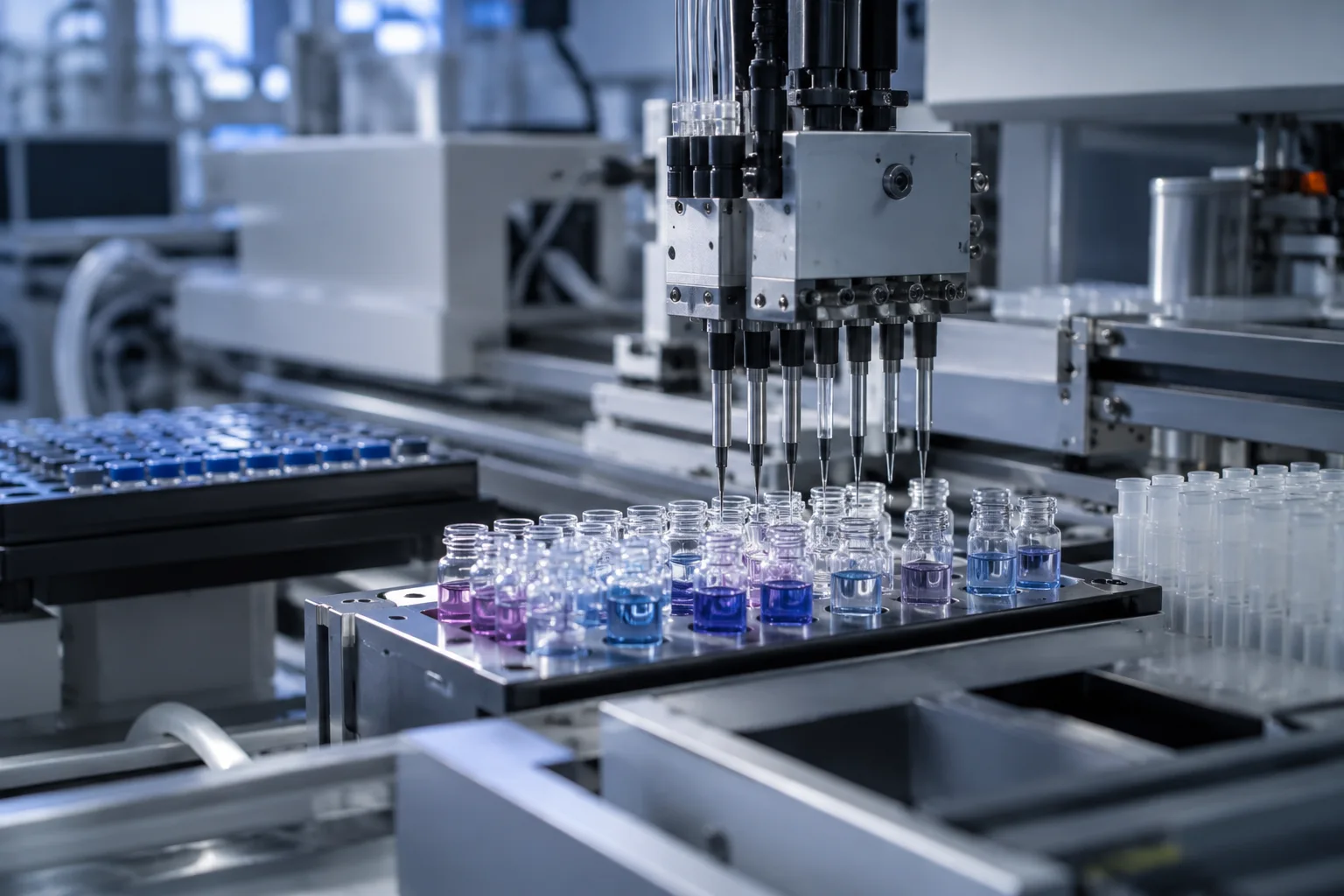
The Copilot for Real-world Experimental Scientists (CRESt) platform combined multimodal models, knowledge-assisted Bayesian optimisation and robotic experimentation. Applied to electrochemical formate oxidation, the study reports that it explored more than 900 catalyst chemistries and ran 3,500 electrochemical tests over three months, identifying a catalyst in an eight-element Pd–Pt–Cu–Au–Ir–Ce–Nb–Cr composition space with a reported 9.3-fold improvement in cost-specific performance.
Why it matters
The study demonstrates an integrated AI and robotics workflow for a bounded catalyst-discovery task, combining text, composition, image, and experimental data.
Caveats
- The abstract-level evidence describes one chemistry space and one electrochemical reaction; it does not establish general performance across materials or laboratories.
- The full paper and supplementary data were not reviewed for exact comparator, sample counts, independent replication, and human intervention.
- The reported catalyst performance is not itself evidence of commercial catalyst manufacture or system-level cost reduction.
Technology profiles
Sources
- peer reviewed paper
A multimodal robotic platform for multi-element electrocatalyst discovery
Zhen Zhang, Zhichu Ren, Chia-Wei Hsu et al.. Nature, 23 Sept 2025. DOI: 10.1038/s41586-025-09640-5.
Last reviewed 21 Oct 2026.