Advanced manufacturing
New ways to make things, from additive to nanoscale fabrication.
Technology profiles
2D semiconductor electronics
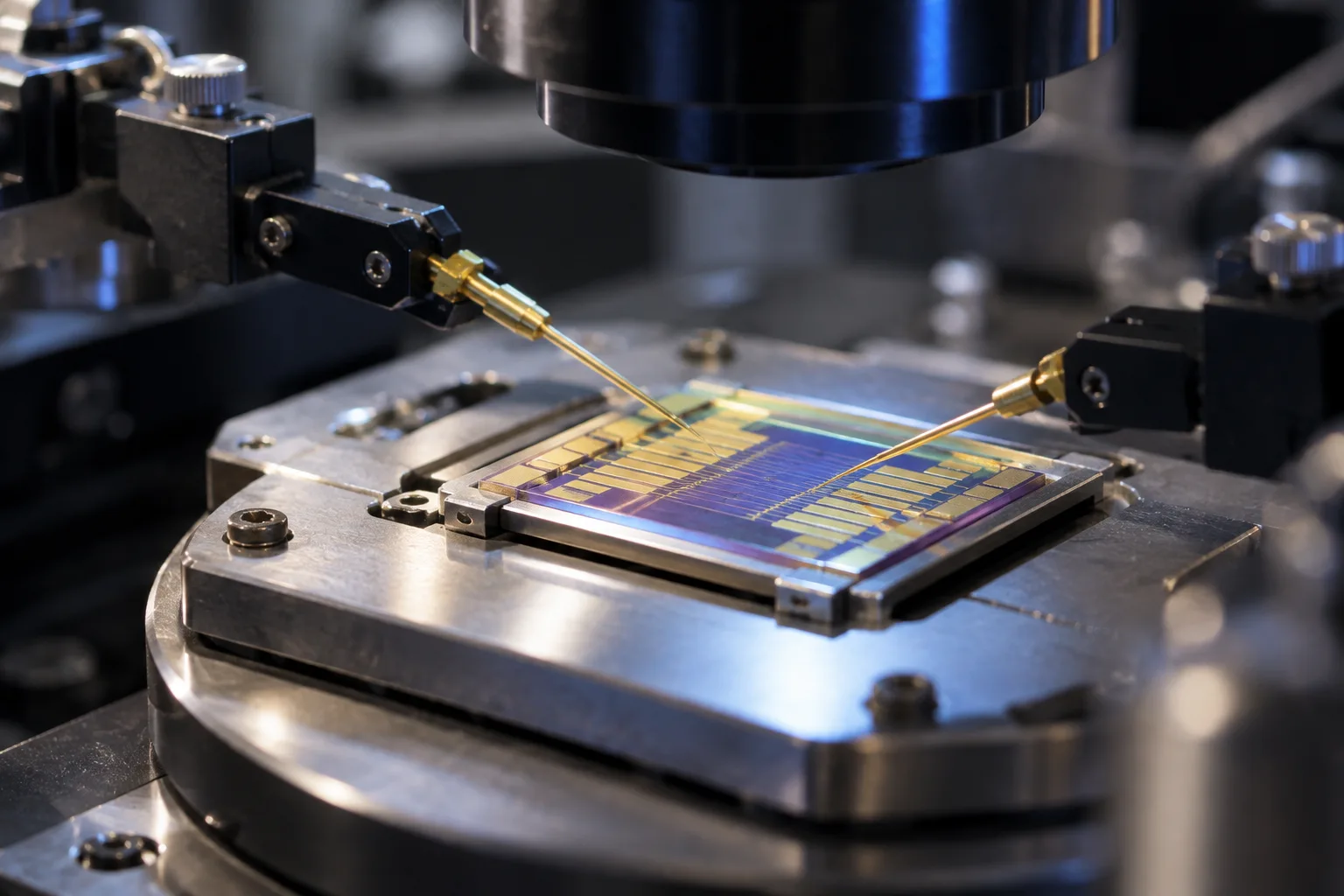
Two-dimensional semiconductors such as molybdenum disulfide (MoS2) form sheets only a few atoms thick and could make transistors that keep working at very small sizes. Lab devices and a small 1-bit processor have been demonstrated, but no production chips built from these materials are described in the sources reviewed here.
3D-printed buildings
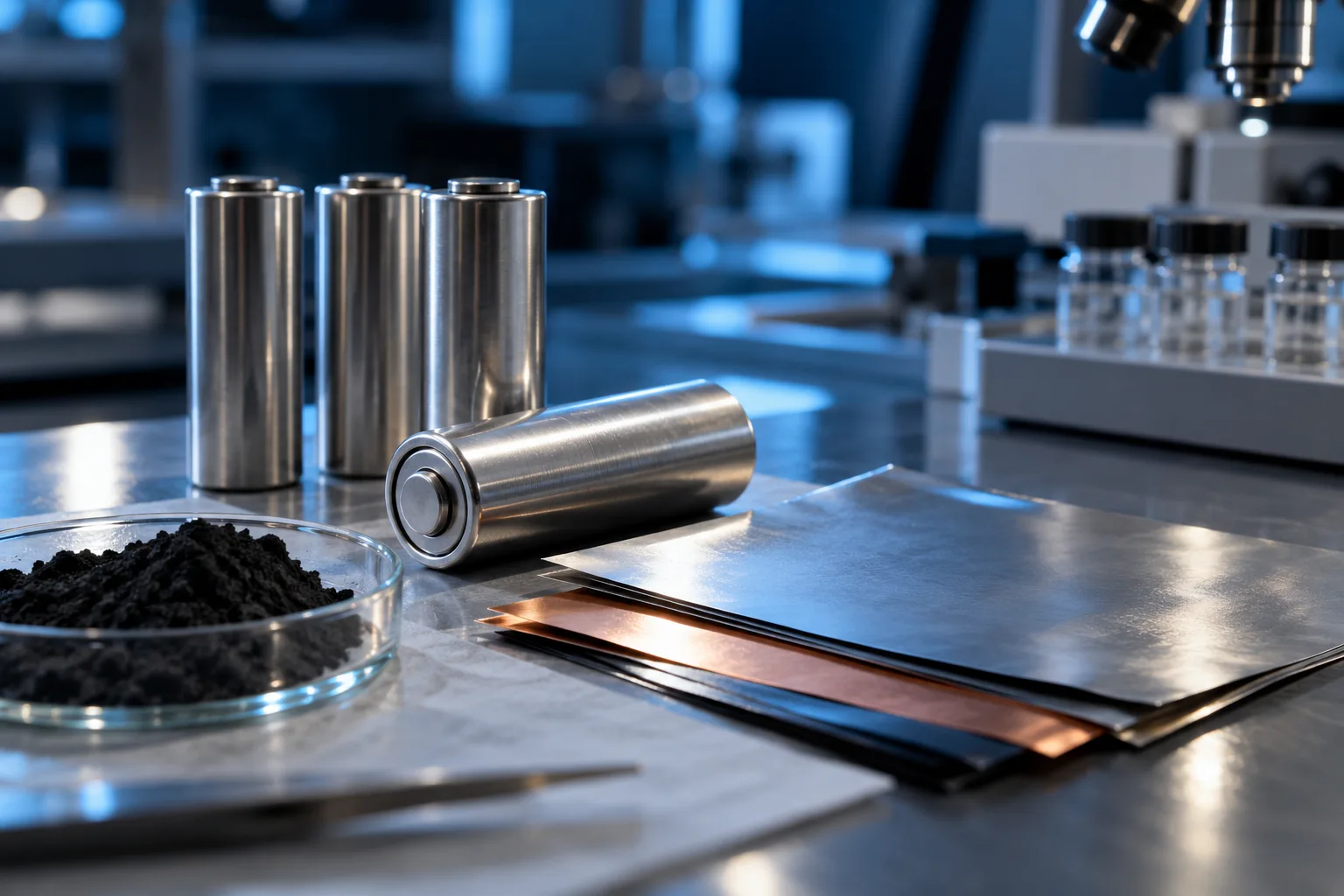
3D-printed buildings are made by a large robotic printer that extrudes a concrete-like mix layer by layer to form walls. A community of 100 printed homes in Texas was reported in 2024 as nearing completion, and a printed social housing scheme in Ireland was reported as built, according to its builder's company. Most lab studies find printed concrete weaker than cast concrete, and a standard for printed walls was approved in July 2026 but is not yet known to be adopted into building codes.
4D printing
4D printing makes 3D-printed objects that change shape after printing, in response to heat, water or a magnetic field. Laboratory demonstrations are well documented. The stent work described here has been tested only in cell cultures and mice.
AI-assisted chip design
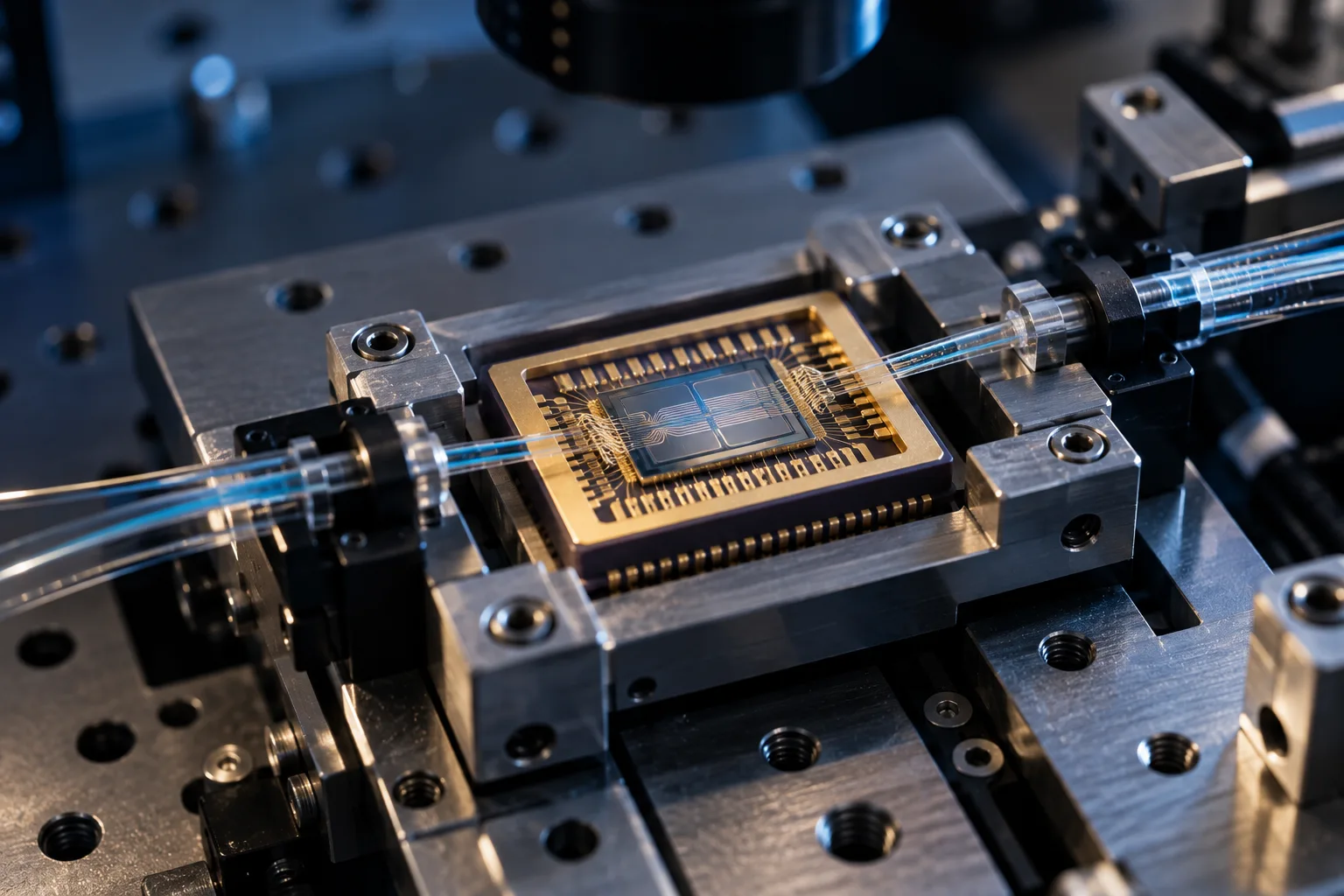
AI-assisted chip design uses machine learning to place large circuit blocks on a chip and to tune the settings of design software. Google's AlphaChip and commercial tools from Synopsys and Cadence report large gains, but Google's central performance claims are disputed and the company figures have not been independently verified.
Assembly-line mass production
Assembly-line production moves work past stationary workers, so each one adds a small part of the whole product. Ford introduced a moving line at its Highland Park plant in 1913, and sources credit it with cutting Model T build times sharply, though the figures and dates differ between sources.
Asteroid mining
Asteroid mining would take water, metals or other useful material from small bodies in space and deliver it to a customer. No asteroid extraction, processing or delivery has yet been demonstrated, although missions have collected and returned small samples.
Autonomous laboratories
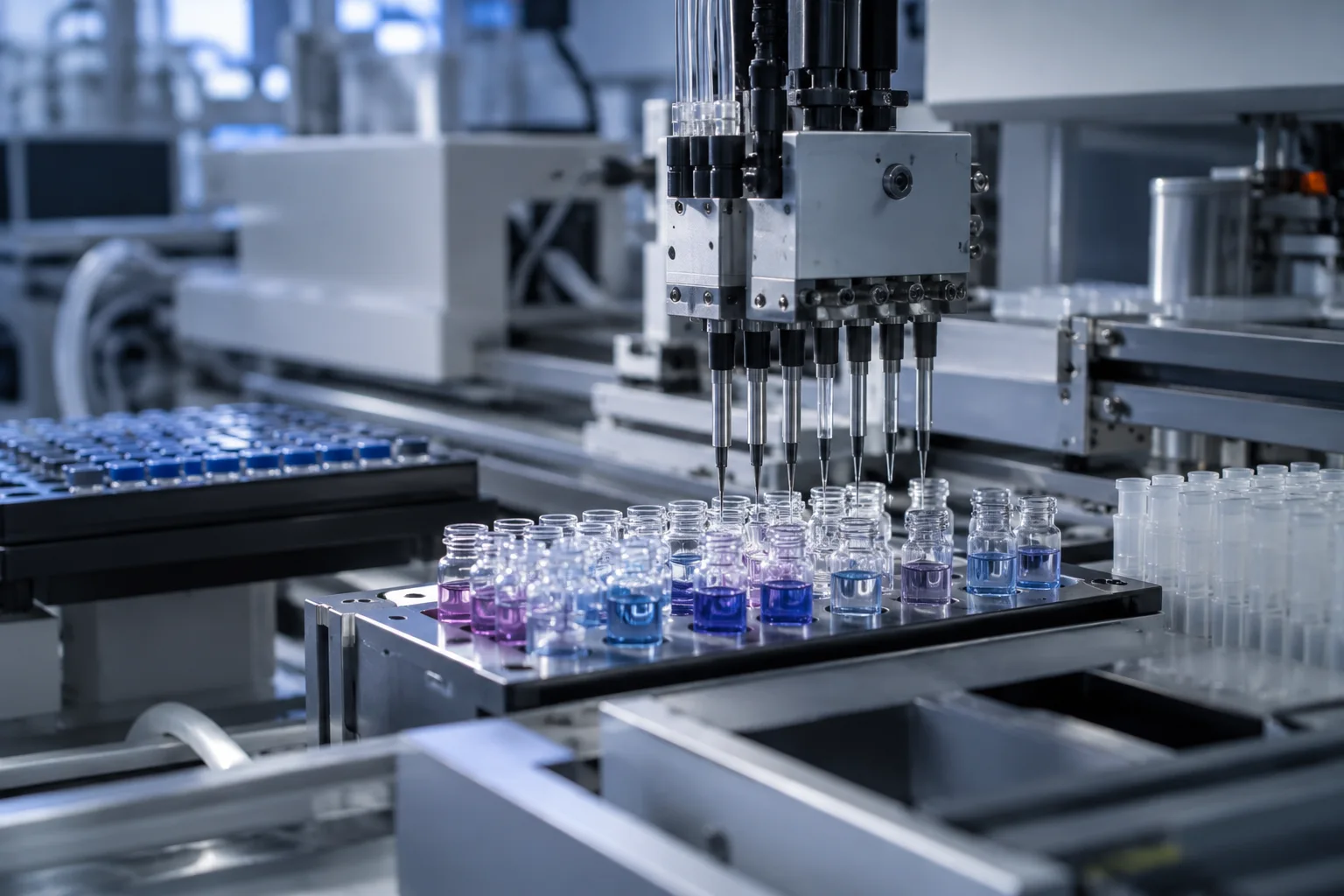
Autonomous laboratories combine automated instruments with software that selects or adapts experiments based on measured results. Research platforms have demonstrated this approach in catalyst discovery, nanoparticle synthesis, inorganic powder synthesis, multi-step fluidic chemistry, protein engineering, exploratory chemistry and optical-material screening. Their autonomy is bounded by human-defined objectives, selected candidate spaces, configured instruments and validation requirements; the examples do not show general-purpose laboratories that independently choose and verify any scientific question.
Car electronics and engine control
Electronic control of engines and vehicle systems grew from Bosch's electronic fuel injection in 1967 to the software-defined vehicles discussed today. Several of these steps were prompted by emissions rules, and electronic fuel injection, engine control units, the CAN bus and OBD diagnostics are now standard in cars.
Carbon-storing building materials
Carbon-storing building materials add carbon-rich biochar to concrete, or cure cement-based products with CO2 so that the gas becomes solid minerals. Pilot and small field trials were reported in 2025, but whether they give a net climate benefit over a full lifecycle is not yet established.
Chiplets and advanced chip packaging
Chiplet designs build a processor from several smaller silicon dies joined by advanced packaging, which can make large designs easier to manufacture and reuse. The joins add cost, heat and capacity limits, and standards such as UCIe and packaging routes from TSMC and Intel are moving the approach into commercial products.
Clutches, gearboxes and differentials
Clutches, gearboxes and differentials are the parts that connect an engine's power to the wheels and let the wheels turn at different speeds. Their history runs from a differential for a steam wagon in the 1820s to the Hydra-Matic automatic transmission of 1939, which Wikipedia describes as the first mass-produced fully automatic passenger-car transmission. Several key dates are disputed or rest on a single source.
Extreme ultraviolet (EUV) lithography
Extreme ultraviolet (EUV) lithography prints the finest features on the most advanced chips, using 13.5 nm light made from tin plasma and optics built by ASML, which is the only maker of these machines. Intel reports that High-NA systems are in high-volume manufacturing for a subset of processors at one chipmaker, but cost, source power and a single supplier remain the main limits.
In-space manufacturing
In-space manufacturing means making, repairing or recycling parts and materials in orbit rather than launching everything from Earth. Early results include optical fibre drawn on the International Space Station, a small semiconductor crystal grown on the China Space Station, and a pharmaceutical crystal form made on a commercial capsule. Most results are reported by the organisations that ran the experiments, only some have been published in peer-reviewed journals, and none has yet been shown to work as a repeatable production process.
In-space servicing and assembly
In-space servicing and assembly means building, repairing or upgrading spacecraft in orbit rather than on the ground. Assembly from launched modules is established through the International Space Station, while robotic servicing is only beginning to fly and robotic construction from raw material remains at test or proposal stage.
Industrial steelmaking
Industrial steelmaking turns molten iron into steel by removing carbon and other impurities. The main methods date from the Bessemer process of 1856 and the open-hearth furnace, and today's routes are the basic oxygen furnace and the electric arc furnace.
Lunar resource extraction
Lunar resource extraction means producing oxygen, water and metals from lunar regolith and ice, so that missions need to launch less material from Earth. Oxygen has been made from simulated lunar soil in Earth tests, and water has been detected remotely near the Moon's south pole, but no lunar extraction has yet been shown on the Moon.
Metal additive manufacturing
Metal additive manufacturing builds metal parts layer by layer, most often by using a laser to melt fine metal powder. It is already in production for some aerospace parts, but flaws inside printed metal, slow qualification and limited data for many alloys still stop it being used for every critical component.
Mycelium composites
Mycelium composites are light materials made by growing fungal threads through agricultural or wood waste and then drying the result in a mould. Laboratory studies show workable stiffness, fire screening results and shaping options, but strength, moisture resistance and environmental benefit depend on the specific formulation and use.
Petroleum refining
Petroleum refining separates crude oil into fractions and changes their molecules to make petrol, diesel, jet fuel and lubricating oils. Its key steps ran from early kerosene stills to catalytic cracking in the 1930s. EPA reports that refinery sulphur dioxide and nitrogen oxide emissions have fallen since 2000.
Photonic integrated circuits
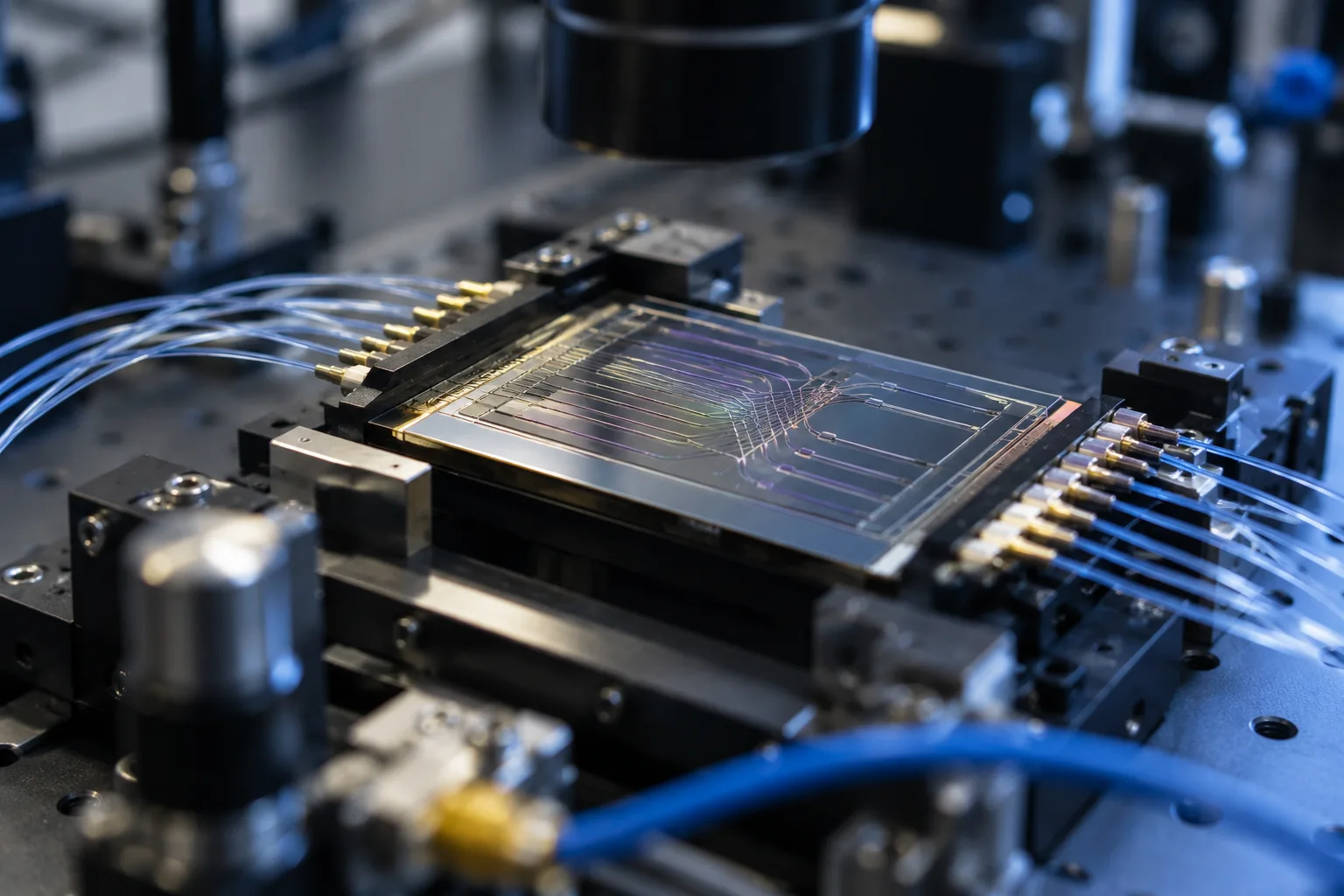
Photonic integrated circuits put lasers, waveguides, modulators and detectors on a single chip so that light, rather than only electricity, carries and processes signals. Silicon photonics has established foundry access, and Broadcom's 2025 co-packaged optics switch uses silicon photonics engines. Thin-film lithium niobate and indium phosphide serve other functions.
Precision machine tools and interchangeable parts
Precision machine tools cut metal to set sizes, and standard gauges and threads let separately made parts fit together. Late eighteenth and early nineteenth century work on boring cylinders, screw threads and interchangeable parts made steam engines, and later cars, practical to build in quantity.
Rolling bearings
Rolling bearings put balls or rollers between a moving part and its support, so the parts roll over each other instead of sliding, which reduces friction. The basic ideas were in place by 1800, but precision manufacture and mass production were still needed to confirm their value. Later work on precision ball grinding and Henry Timken's 1898 tapered roller design made rolling bearings practical for wheels and shafts.
Self-monitoring infrastructure
Self-monitoring infrastructure fits bridges, tunnels, dams and buildings with sensors that record how they move, load and respond to their surroundings. Field systems now capture useful data and send timely alerts, but sensor readings do not replace inspection or prove that a structure is safe.
Springs and vehicle suspension
Vehicle suspension is the set of springs, dampers and linkages that connects each wheel to the body of a vehicle. It developed from carriage leaf springs into the independent systems used in most modern cars, and its job is to keep the tyres in contact with uneven roads while keeping the ride comfortable.
The electric motor
An electric motor turns electrical energy into rotary motion using magnetic force, a principle Michael Faraday demonstrated at the Royal Institution in 1821. From Thomas Davenport's battery-powered motor of 1837 and Nikola Tesla's alternating-current patents of 1888, it now powers electric vehicles and starter motors in the form of permanent-magnet and induction designs.
The internal combustion engine
An internal combustion engine burns fuel inside a closed cylinder to push a piston. The design developed from Lenoir's gas engine of 1860, through Otto's four-stroke engine of 1876 and Diesel's patent of 1892, with spark ignition, carburettors and magnetos added by several inventors and companies.
The motor car
The motor car came together over more than a century from many separate inventions, from Cugnot's steam carriage of 1769 and Benz's gas-engined vehicle patent of 1886 to Ford's mass-produced Model T and today's electronically controlled cars. Electric cars have their own early history, peaking around 1900 before petrol cars took over most of the market.
The steam engine
The steam engine turns the pressure of steam, made by heating water with fuel, into mechanical work. Thomas Newcomen's engine of about 1712 was the first practical design, and James Watt's separate condenser of 1769 cut its fuel use. Richard Trevithick's high-pressure engines, and his 1804 locomotive on the Merthyr tramroad, showed that steam could move itself. Road vehicles needed frequent refuelling, and the Locomotives Act 1865 restricted their speed.
The wheel and axle
The wheel and axle lets loads roll over land instead of being dragged. The earliest wheels and wheeled vehicles are known from a few wooden wheels, pictures on pottery and tomb finds dated to the late fourth millennium BC and later, and the interpretation of that early evidence is still debated.
Thin-film flexible robots
Thin-film flexible robots are less than a millimetre thick and are built from flexible circuit films. They creep across surfaces and into narrow gaps using electrostatic forces, and a 2026 laboratory prototype was shown inspecting a gap and grinding and machining test workpieces, although it still depends on external high-voltage equipment.
Two-photon lithography and nanoscale 3D printing
Two-photon lithography uses a focused laser to harden a liquid resin only at the tiny point where two photons are absorbed together. This lets it print three-dimensional structures with features smaller than the laser's wavelength, but it remains mainly a research tool because suitable resins are scarce and the method has not been scaled to commercial volumes.
Vehicle brakes
Vehicle brakes have moved from wooden blocks and band brakes to hydraulic, disc and electronically controlled systems over more than a century. Peer-reviewed studies link electronic stability control, which Bosch says reached the market in 1995, to fewer loss-of-control crashes, but the size of the effect is uncertain.
Vehicle safety systems
Modern cars protect people in crashes through layers of design: crumple zones that deform in a controlled way, seat belts, airbags and independent crash testing. The IIHS reports estimates, citing NHTSA and Kahane (2015), that airbags and lap and shoulder belts together reduce the risk of death in frontal crashes by 61%. These figures come from models built on crash records rather than direct measurement.
Vehicle steering
Vehicle steering turns the front wheels so that a cart or car follows the path its driver chooses. Its history runs from pivoting carriage axles and Ackermann geometry to steering wheels, rack and pinion gears and power assistance.
Vulcanised rubber and pneumatic tyres
Vulcanisation, a process that heats rubber with sulphur, was patented by Charles Goodyear in 1844. Air-filled rubber tyres were patented by Robert William Thomson in the 1840s, and John Boyd Dunlop made a practical air-filled tyre in 1888.
How far away are we?
3D-printed homes as a normal way to build
Pilots · 4 of 7 steps done
Buildings that lock away carbon
Pilots · 2 of 6 steps done
Chips made with the next generation of EUV machines
Pilots · 5 of 9 steps done
Computer chips built from atom-thin materials
Engineering prototypes · 2 of 7 steps done
Computer chips designed mostly by AI
Pilots · 2 of 6 steps done
Computers built from mix-and-match chiplets
Engineering prototypes · 4 of 7 steps done
Factories that run without people
Pilots · 3 of 5 steps done
Making things in orbit that can't be made on Earth
Engineering prototypes · 3 of 6 steps done
Medical implants that change shape inside the body
Pilots · 3 of 5 steps done
Metal 3D printing as a mass-production method
Scaling up · 3 of 7 steps done
Mining water and oxygen on the Moon
Engineering prototypes · 3 of 7 steps done
Printing features smaller than a cell
Pilots · 4 of 8 steps done
Breakthroughs
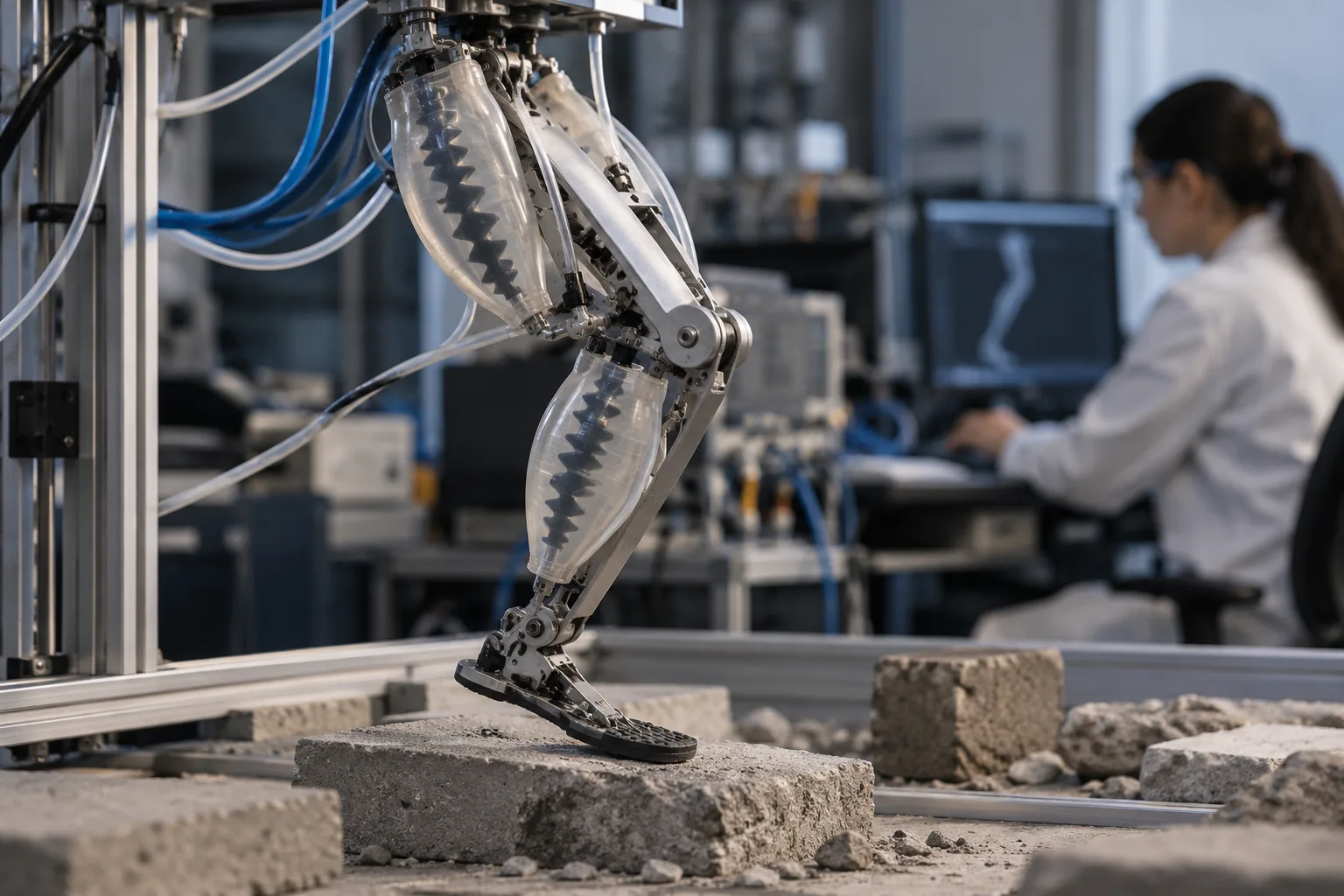
Thin flexible robot demonstrates inspection and machining on laboratory structures
The 970 μm-thick, 19.7 g robot used a two-degree-of-freedom electrostatic actuator and electrostatic adhesive feet. In laboratory tests it achieved 21.7 μm actuator repeatability, a maximum actuator speed of 290 mm/s and 1.07 N output force; robot demonstrations included carrying up to 4.06 times its own mass, inspection of a 7 mm-high gap, curved-surface grinding and microscale electrical-discharge machining. It also withstood an impact from a 3 kg weight.
Grayscale projection two-photon lithography reports 55 nm nanowires and 1.7 billion voxels per second
Kim and Saha (Georgia Institute of Technology) report grayscale projection two-photon lithography. Despite using a binary mask, the method projects more than 15,000 focal spots, each with independently tunable intensity. The abstract says the authors demonstrated printing nanowires as thin as 55 nm and achieved rates of 1.7 billion voxels per second and 215 mm³ per hour. The abstract also describes rapid 3D printing with a single femtosecond pulse per layer. The abstract does not give the resin, laser wavelength or specific exposure parameters.
Metalens arrays split one femtosecond laser into more than 120,000 focal spots for parallel nanoscale 3D printing
The team split a femtosecond laser into more than 120,000 focal spots using arrays of metalenses. A spatial light modulator adjusts the intensity of each spot in real time. The spots wrote 3D structures at the same time over centimetre-scale areas, and the reported minimum feature size was 113 nm in the demonstrated structures. The Lawrence Livermore National Laboratory (LLNL) release states that the throughput is more than a thousand times that of commercial systems. The work also printed 16 different microscopic chess openings and produced tens of millions of micro-particles per day.
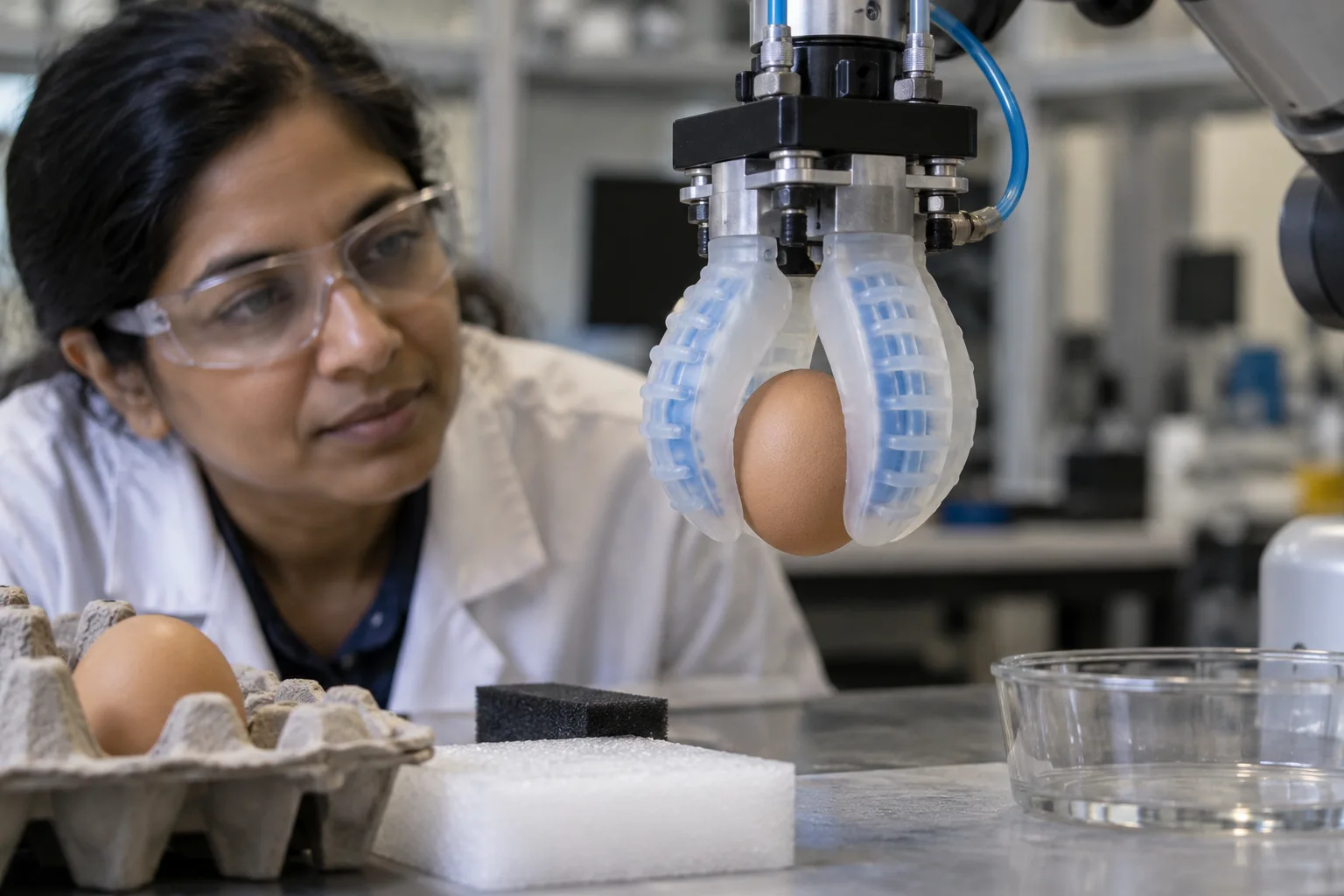
Hybrid humanoid finger grasps tofu and pinches 0.1 mm paper in lab tests
In laboratory experiments reported in the abstract, grippers built from a humanoid finger grasped tofu, pinched 0.1 mm paper, held a 23.2 cm basketball and supported 5.275 kg weights. The finger has rigid bones, flexible springs and a soft silicone skin, and a pneumatic actuator sits between the bones and the skin. The sources checked report no success rates, trial counts or grip force figures.
CRESt platform screens more than 900 catalyst chemistries in three months
The Copilot for Real-world Experimental Scientists (CRESt) platform combined multimodal models, knowledge-assisted Bayesian optimisation and robotic experimentation. Applied to electrochemical formate oxidation, the study reports that it explored more than 900 catalyst chemistries and ran 3,500 electrochemical tests over three months, identifying a catalyst in an eight-element Pd–Pt–Cu–Au–Ir–Ce–Nb–Cr composition space with a reported 9.3-fold improvement in cost-specific performance.
Automated platform optimises nanoparticle synthesis across hundreds of experiments
The platform combined GPT-based literature retrieval, automated synthesis and characterisation, and an A*-based optimisation loop. Researchers applied it to Au, Ag, Cu2O and PdCu nanoparticles. For multi-target gold nanorod synthesis, the study ran 735 experiments to optimise longitudinal plasmon peaks across 600–900 nm; it also reports 50 experiments for gold nanospheres and silver nanocubes. Under repeated identical gold-nanorod parameters, peak and full-width-at-half-maximum deviations were no greater than 1.1 nm and 2.9 nm, respectively.
Fudan team builds a 32-bit RISC-V microprocessor from 5,900 MoS2 transistors
Researchers at Fudan University fabricated a RISC-V microprocessor that executes standard 32-bit instructions using 5,900 transistors made from the two-dimensional semiconductor molybdenum disulfide (MoS2), together with a standard cell library of 25 logic unit types, by co-optimising the process flow and circuit design. Previous 2D semiconductor circuits had reached only a few hundred transistors.
Coloured-resist flat lenses focus 550 nm light to a 1.1 µm spot without etching
Flat Fresnel zone plate lenses were patterned from coloured photoresist on 8-inch glass wafers using an i-line stepper, with no etching step. At a 550 nm design and test wavelength, they focused light to a spot about 1.1 µm in diameter. Measured focusing efficiency was 7.2%, counted within 3 times the full width at half maximum. Simulation gave 7.3%. The lenses imaged features down to 1.1 µm on a USAF 1951 target.
Ireland's Grange Close printed social housing completed in 132 working days, company reports
According to a COBOD announcement, the Grange Close scheme in Ireland, a terrace of three apartments of 110 m² each (330 m² total floor space), was built by Harcourt Technologies (HTL.tech) with a COBOD BOD2 printer, to ISO/ASTM 52939:2023. The announcement reports completion in 132 working days, against 203 working days for conventional methods (its introduction says more than 200 days). It reports 12 printing days for the walls. These timing figures are the builder's and printer maker's own and have not been independently verified.
Hemp-based mycelium composite measured at 40 mW/(m·K) thermal conductivity
In a laboratory study, mycelium biocomposites made from hemp shives, with the fungus Trametes versicolor, had a thermal conductivity of 40 mW/(m·K) according to the abstract. The results text gives an average of 40 to 41 mW/(m·K) for the hemp group, the lowest group average among the four substrate groups tested (twelve variants in total). Conductivity was measured with a heat flow meter to ISO 8301:1991 on 200 × 200 × 30 mm specimens (three per variant). The three hemp variants had densities of 0.09 to 0.14 g/cm³ and bending strengths of 0.10 to 0.15 MPa.
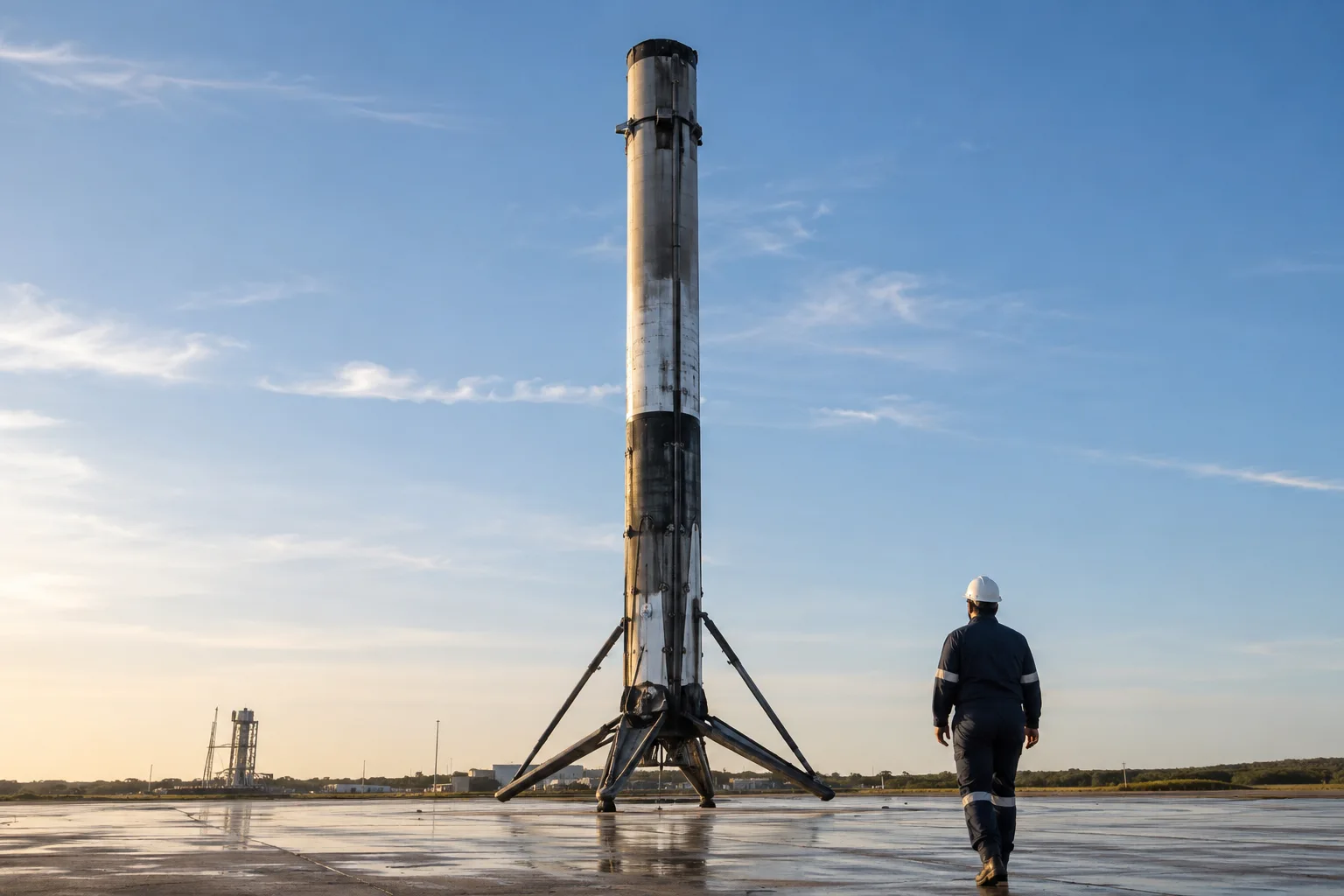
SpaceX catches a Super Heavy booster with launch tower arms on its first attempt
On Starship Flight 5, launched from Starbase near Boca Chica, Texas, on 13 October 2024, a Super Heavy booster was caught by the chopstick arms of the launch tower about seven minutes after liftoff. A SpaceX manager is quoted as saying this was the first attempt at the catch. The booster was not flown again as part of this record.
ESA-built demonstrator prints first metal part on the ISS
In August 2024 ESA's Metal 3D Printer, a technology demonstrator built by Airbus and partners, finished printing the first 3D metal shape on the International Space Station. The printer was installed in the European Drawer Rack in ESA's Columbus module and print operations were overseen from the ground by CNES. ESA reports the first sample and three further planned samples will return to Earth for quality analysis. The announcement gives no dimensions, alloy name, mechanical properties or quality test results.