How far are we from a permanent base on the Moon?
No permanent human base exists on the Moon. Robotic landers have reached the lunar south pole, and some subsystems have been tested on Earth. NASA's 2026 Moon Base programme sets out landers, rovers and deliveries, but most of its dates are targets. The sources checked for this record show no integrated surface base, no crewed surface stay and no measured local supply of resources on the Moon.
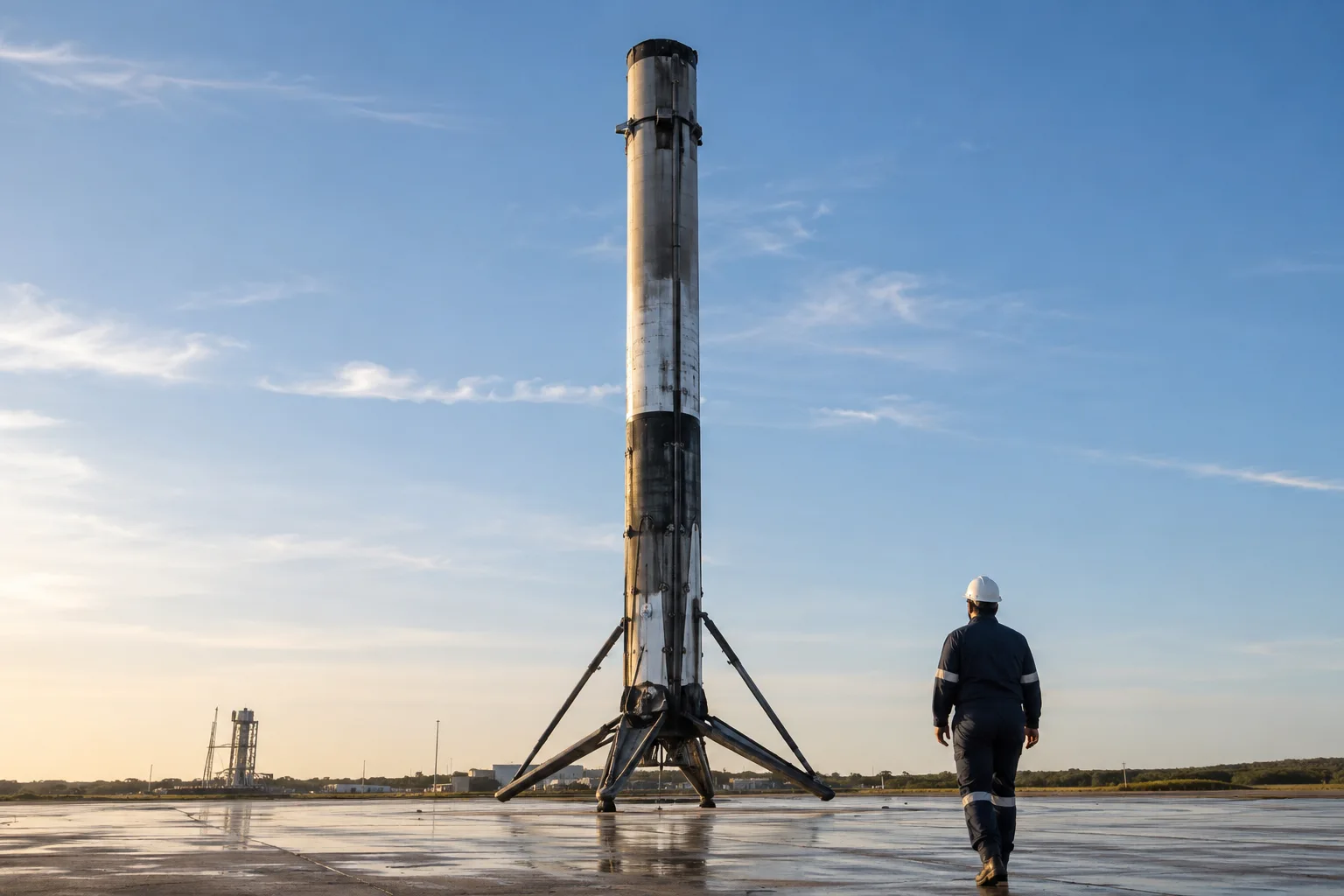
Getting closer. Prototypes exist, but not in real-world use.
Engineering prototypes have been built and tested. Robotic landers have reached the Moon, and molten-regolith oxygen extraction has been shown in a vacuum chamber on Earth, using simulant. No integrated uncrewed surface infrastructure has been shown on the Moon, and no crewed surface base exists, so the stage is engineering prototype rather than pilot.
The tech tree
Everything recorded on Vrulum that this future needs, oldest foundations at the top and the goal at the bottom. Lines show what each step requires.
- 2020Small modular nuclear reactorsPilot and early commercial Unlocked.
- 2024Commercial lunar landersPilot and early commercialRequires: Reusable launch vehicles. Unlocked.
- 2025Robotic lander comes to rest on the MoonDone Unlocked.
- 2025Oxygen from molten regolith shown in an Earth vacuum testDone Unlocked.
- 2026Landers, rovers and deliveries planned under Moon BaseIn progress Being researched.
- 2026Crewed operations on the lunar surfaceNot started Locked.
- Date not recordedDrilled lunar sample from a resource instrumentNot started Locked.
- Date not recordedLunar surface power system operating on the MoonNot started Locked.
- GoalA permanent base on the MoonGoalRequires: Reusable launch vehicles, In-space manufacturing, Small modular nuclear reactors, Commercial lunar landers, Robotic lander comes to rest on the Moon, Drilled lunar sample from a resource instrument, Oxygen from molten regolith shown in an Earth vacuum test, Landers, rovers and deliveries planned under Moon Base, Crewed operations on the lunar surface, Lunar surface power system operating on the Moon. Locked.
The road so far
2 of 6 steps done, 1 in progress.
- Done · 6 Mar 2025Robotic lander comes to rest on the Moon
The IM-2 Athena lander came to rest in a roughly horizontal orientation. NASA's Planetary Data System record says this prevented the TRIDENT drill from reaching the lunar surface, so the drill could not complete its science objectives. A landing is therefore not the same as a working surface instrument. [4]
- Not startedDrilled lunar sample from a resource instrument
The 2025 PRIME-1 drill attempt did not reach the lunar surface, so it did not produce the sample its resource science needed. No drilled sample from a lunar resource instrument is recorded in the sources checked. [4]
- Done · May 2025Oxygen from molten regolith shown in an Earth vacuum test
NASA reported a test at its Kennedy Space Center in which about 25 kg of simulated lunar soil was heated to about 1,700°C and processed in a vacuum chamber. The process released molecular oxygen and separated metals. The test used simulant on Earth, not lunar soil on the Moon. NASA said post-test data analysis would help teams understand how full-scale reactors for the lunar surface work thermally and chemically. [3]
- In progress · 26 May 2026Landers, rovers and deliveries planned under Moon Base
NASA's May 2026 update lists planned landers, rovers and cargo deliveries. The first Moon Base lander is targeted for launch no earlier than fall 2026. NASA's goal is to deploy crewed and uncrewed mobility systems to the lunar surface by 2028. NASA's 30 June 2026 awards list four new lunar landings targeted for late 2028. NASA describes these dates as planned or targeted, not firm. [1][2]
- Not started · 26 May 2026Crewed operations on the lunar surface
NASA's May 2026 update refers to crewed Artemis landing missions in 2028 but gives no firm crewed surface date. The sources checked show no crewed lunar surface stay. [1]
- Not startedLunar surface power system operating on the Moon
The sources checked for this record do not show a power system operating on the Moon. Power sets the limit for oxygen production, mobility and construction, so this step is a dependency for the rest of the base.
Why it matters
A lunar base would test the systems that any longer stay beyond Earth would need: power, life support, mobility, construction and the use of local materials. Separating what has been tested on Earth, what has been carried out on the Moon and what is still planned helps readers judge progress without treating programme dates as results.
What stands in the way
- No integrated uncrewed surface infrastructure has been shown on the Moon. Power, communications, mobility, resource processing and habitat systems have not been run together through a lunar day-night cycle in the sources checked.
- Landing geometry: the 2025 IM-2 lander came to rest nearly horizontal, which stopped the PRIME-1 drill from reaching the surface. Resource instruments depend on the lander's position as well as their design.
- Oxygen extraction has been shown in a vacuum chamber on Earth, using simulant. This does not show that oxygen can be produced from lunar soil on the Moon.
- Power: the sources checked do not show a lunar power system operating on the Moon, and power limits oxygen production, mobility and construction.
- Resupply: no measured local supply chain exists in the sources checked, so a base would depend on Earth for many items, and partial self-sufficiency has not been measured for any system.
Published forecasts
What others have predicted. These are their estimates, not ours.
| Who | Forecast | Timeframe | Made |
|---|---|---|---|
| NASA | NASA's goal is to deploy crewed and uncrewed mobility systems to the lunar surface by 2028, under the Lunar Terrain Vehicle awards that include the Crewed Lunar Vehicle and Pegasus rovers. NASA says the selected providers will finalize rover designs over the next 18 months. [1] | 2028 | 26 May 2026 |
| NASA | Four new robotic lunar landings, with Astrobotic, Firefly Aerospace and Intuitive Machines as the selected companies, targeted for late 2028 under the Moon Base Program. [2] | 2028 | 30 Jun 2026 |
Signals to watch
- Moon Base I lander landing and operating its payloads, measured against the no-earlier-than fall 2026 target.
- Follow-on lunar drilling or prospecting that returns depth-resolved measurements from a stable lander.
- A lunar resource-processing payload that measures feedstock, recovered mass, purity, power and losses on the Moon.
- A reactor or surface power system with a verified integrated design, mass, deployment sequence and power distribution plan.
- Habitat designs that state crew duration, resupply mass, environmental-control closure, emergency shelter and spare-part strategy.
- Autonomous excavation that moves and places meaningful quantities of regolith on the Moon and reports energy use, reliability and wear.
- Published measures of partial self-sufficiency, such as imported mass saved per crew-day or locally produced oxygen per unit of energy.
Sources
- government report
NASA Provides Update on Moon Base Rovers, Landers, Missions
NASA, 26 May 2026. - government report
NASA Awards More Moon Base Science, Previews New Opportunities
NASA, 30 Jun 2026. - government report
NASA Kennedy Breathes Life into Moon Soil Testing
NASA, 5 May 2025. - dataset
CLPS Task Order PRIME-1 Athena Lander
NASA Planetary Data System, 2025.
Last reviewed 21 Oct 2026.