Climate and environment
Technologies for mitigation, adaptation and environmental monitoring.
Technology profiles

AI weather forecasting
Machine-learning weather models such as GraphCast, GenCast and ECMWF's AIFS produce global forecasts in minutes. In published and operational tests they match or beat leading physics-based systems on many headline measures, but they still struggle with small-scale detail, the early growth of forecast error and physical consistency.
Artificial photosynthesis
Artificial leaves are devices that use sunlight to split water into hydrogen and oxygen in one integrated unit. Laboratory modules have reached about 11% solar-to-hydrogen efficiency under one-sun illumination, but durability and outdoor performance at useful scale have not yet been shown.
Atmospheric water generators
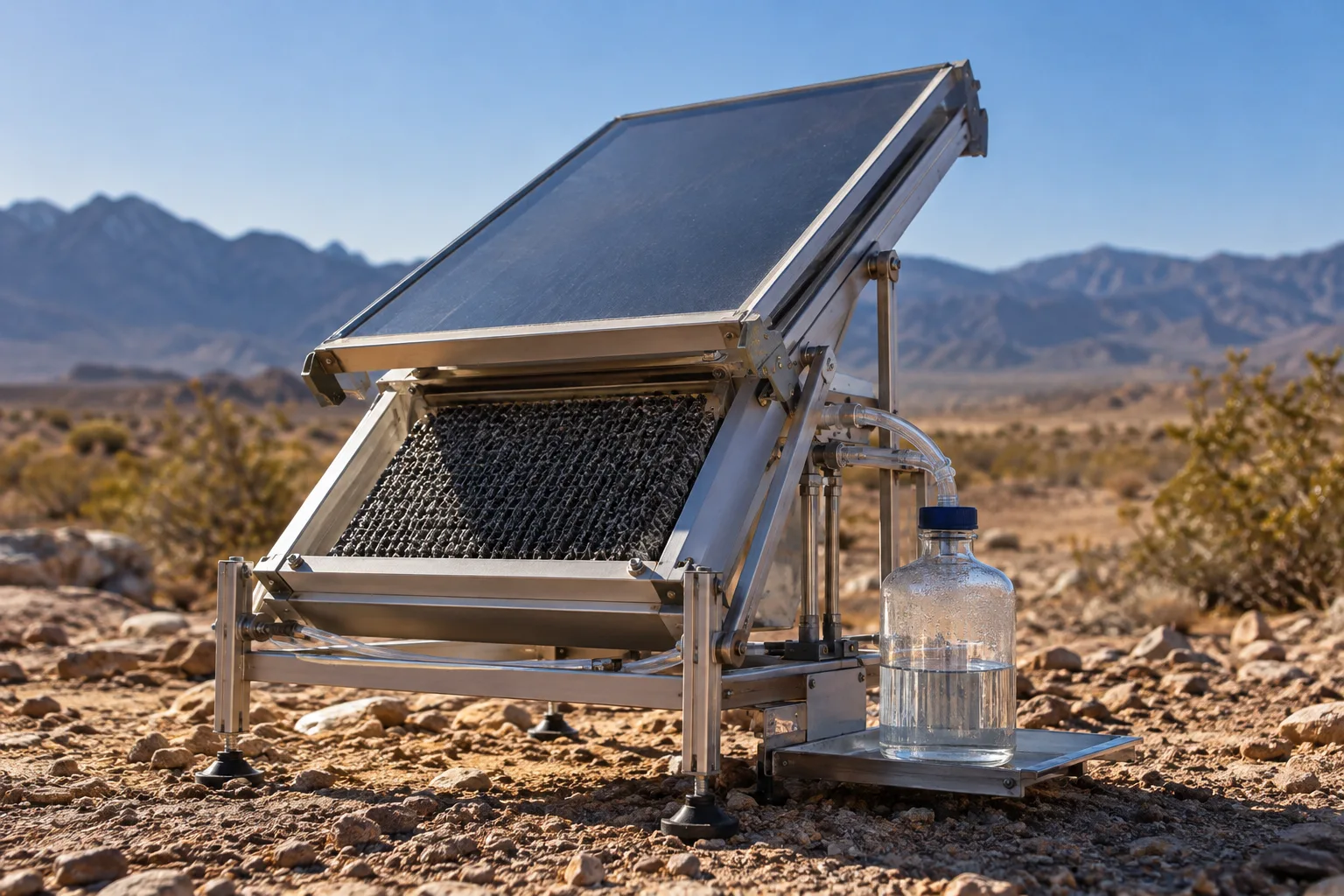
Atmospheric water generators are compact machines that turn moisture in the air into drinking water, usually by chilling the air below its dew point. Energy use per litre rises in dry or cold conditions, and the performance figures checked for this profile come from a small number of studies.
Atmospheric water harvesting (MOF/sorbent based)
Sorbent-based atmospheric water harvesting captures water vapour in porous materials such as metal-organic frameworks, then releases it for collection as liquid water. Prototypes have operated in desert conditions, including at very low humidity, but measured output depends on sorbent mass, climate and device design. A key bottleneck is moving released vapour to a condenser cool enough to collect it.
Autonomous underwater vehicles
Autonomous underwater vehicles are robots that travel and measure in the ocean without a pilot on board or a cable to a ship. Argo floats, ocean gliders and under-ice vehicles now collect large amounts of ocean data, but batteries, the lack of GPS underwater and, beneath ice, the lack of any surface contact still limit how far and how long they can work.
Biochar
Biochar is a carbon-rich solid made by heating biomass with little or no oxygen, which can be added to soil to store carbon for a long time. Field and laboratory evidence suggests much of its carbon persists for decades or longer, but yield effects vary widely by region and soil, and credited volumes are reported inconsistently.
Carbon-storing building materials
Carbon-storing building materials add carbon-rich biochar to concrete, or cure cement-based products with CO2 so that the gas becomes solid minerals. Pilot and small field trials were reported in 2025, but whether they give a net climate benefit over a full lifecycle is not yet established.
Catalytic converters
A catalytic converter is a device in a petrol car's exhaust that uses a catalyst to turn carbon monoxide, unburnt fuel and nitrogen oxides into less harmful gases. It has been fitted to new petrol cars in the United States since the mid-1970s, and it depends on lead-free petrol.
Digital twins of the Earth
Digital twins of the Earth are high-resolution, regularly updated simulations of the climate and weather system, built to test 'what if' scenarios and support planning. The EU's Destination Earth Climate Change Adaptation Digital Twin runs global simulations at about 5 to 10 km, and NVIDIA's Earth-2 platform adds AI emulators whose speed and energy claims come from the company and have no published benchmark.
Direct air capture of CO2
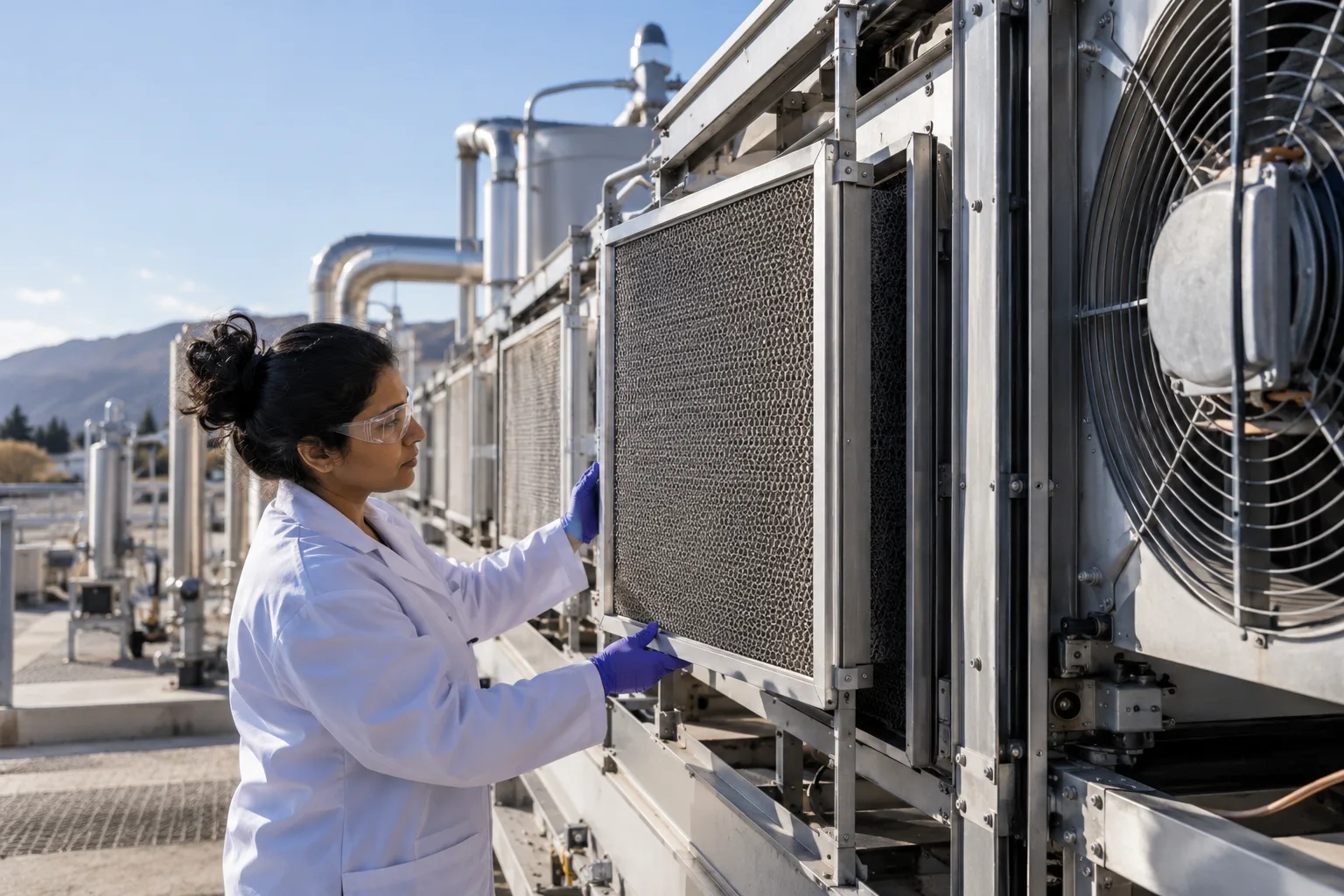
Direct air capture uses chemical sorbents to pull carbon dioxide from ambient air and concentrate it for storage. The technology is at an early commercial stage, and cost per tonne and energy use are the main open questions.
Drought-tolerant crops
Crop varieties bred or engineered to keep yields up when rain is short. Conventionally bred drought-tolerant maize is in use in parts of sub-Saharan Africa, while the transgenic HB4 wheat and soybean have regulatory approvals in several countries but limited evidence of farm-scale performance.
Electrochemical CO2 conversion
Electrochemical CO2 conversion uses electricity to turn carbon dioxide into chemicals such as formate. Prototype stacks built from 1,526 cm² cells have been reported, but long-term stability, energy use and climate benefit at industrial scale are not yet shown.
Electrolysers for low-carbon hydrogen
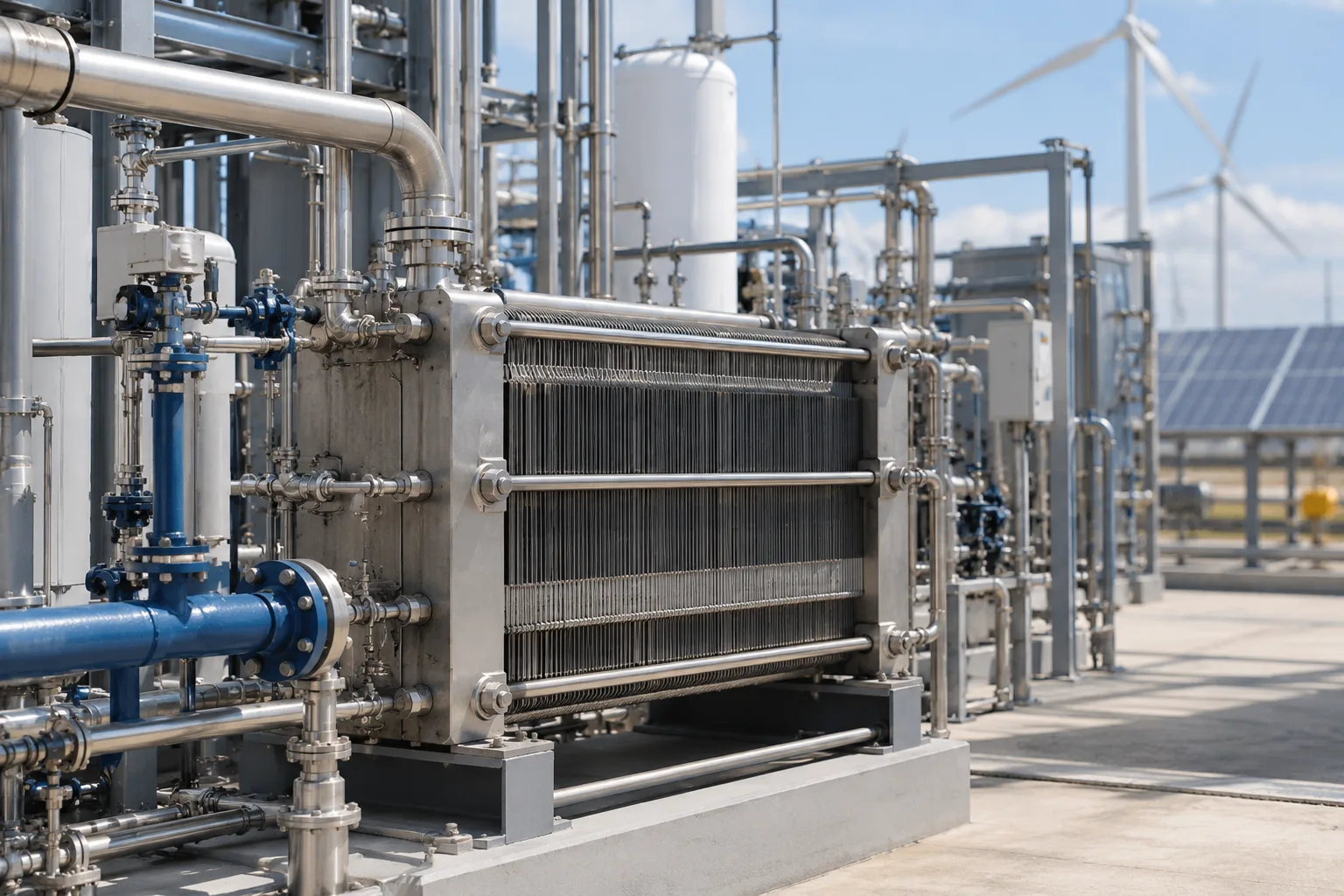
Electrolysers use electricity to split water into hydrogen and oxygen. Alkaline and proton-exchange-membrane systems are commercially available, while solid-oxide and anion-exchange-membrane designs offer different trade-offs and maturity levels. Hydrogen is only low emissions when the electricity and wider supply chain are low emissions; project announcements and electrolyser capacity do not by themselves establish climate benefit or delivered hydrogen output.
Enhanced geothermal systems
Enhanced geothermal systems (EGS) engineer flow paths through hot rock that does not let water pass easily, so that water can circulate, pick up heat and return to the surface. A 30-day circulation test at a Utah research site in 2024 was reported by the U.S. Department of Energy as positive initial evidence, but long-term heat output and induced seismicity are not yet established across projects.
Enhanced rock weathering
Enhanced rock weathering spreads finely crushed silicate rock, such as basalt, on farmland so that it dissolves and locks CO2 into carbonate. Field trials show measurable removal and some yield gains, but removal is mostly calculated rather than measured, and estimates of scale and cost vary widely.
Environmental DNA monitoring
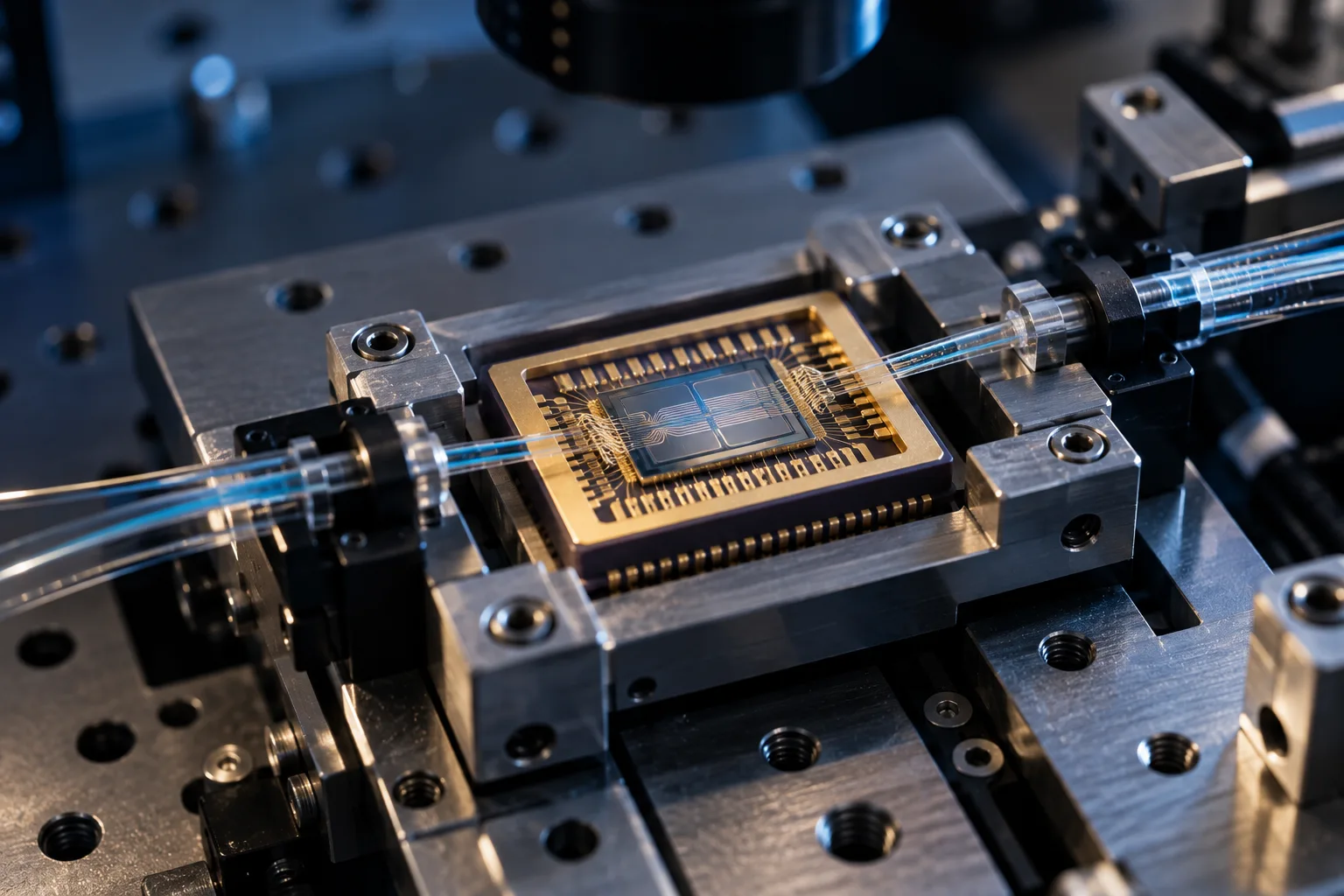
Environmental DNA (eDNA) monitoring detects species from traces of DNA shed into water, soil or air, so surveyors do not have to catch or see the animals. It is used as a survey method for great crested newts in England, but false positives, false negatives and unreliable abundance estimates limit its use.
Gene drive mosquitoes
Gene drive mosquitoes are genetically edited mosquitoes designed to pass a population-reducing change to most of their offspring, with the aim of suppressing the malaria-carrying Anopheles population. The work so far is laboratory-based. A 2025 field programme in Burkina Faso, which used non-gene-drive modified mosquitoes, was halted by the government.
Hydrogen aircraft
Hydrogen aircraft would use hydrogen either in a fuel cell that drives electric propellers or in a modified gas turbine. Engine and fuel-cell tests, an uncrewed drone flight and airport ground trials have taken place, but no hydrogen passenger aircraft has entered service and the climate benefit depends on how the hydrogen is made.
Nitrogen-fixing cereals
Nitrogen-fixing cereals would take nitrogen from the air through engineered plants or root-associated microbes, reducing the need for synthetic fertiliser. Some commercial microbial products are sold for maize, but their field results vary, and engineering cereals to fix nitrogen themselves has so far only reached early laboratory steps.
Ocean alkalinity enhancement
Ocean alkalinity enhancement adds alkaline material to seawater so that the sea takes up more carbon dioxide from the air. Small field trials and early carbon credits exist, but the removal in those credits was calculated with models rather than measured, ecological effects depend on the material used, and the legal framework is still being developed.
Ocean thermal energy conversion
Ocean thermal energy conversion (OTEC) runs a heat engine on the temperature difference between warm surface seawater and cold deep seawater. Net electricity was reported at small scale in a 1979 offshore test. The most recent reported result is electrical output from short 2026 sea trials of a 20 kW-class prototype, but no long-duration offshore plant has yet been reported.
Passive daytime radiative cooling
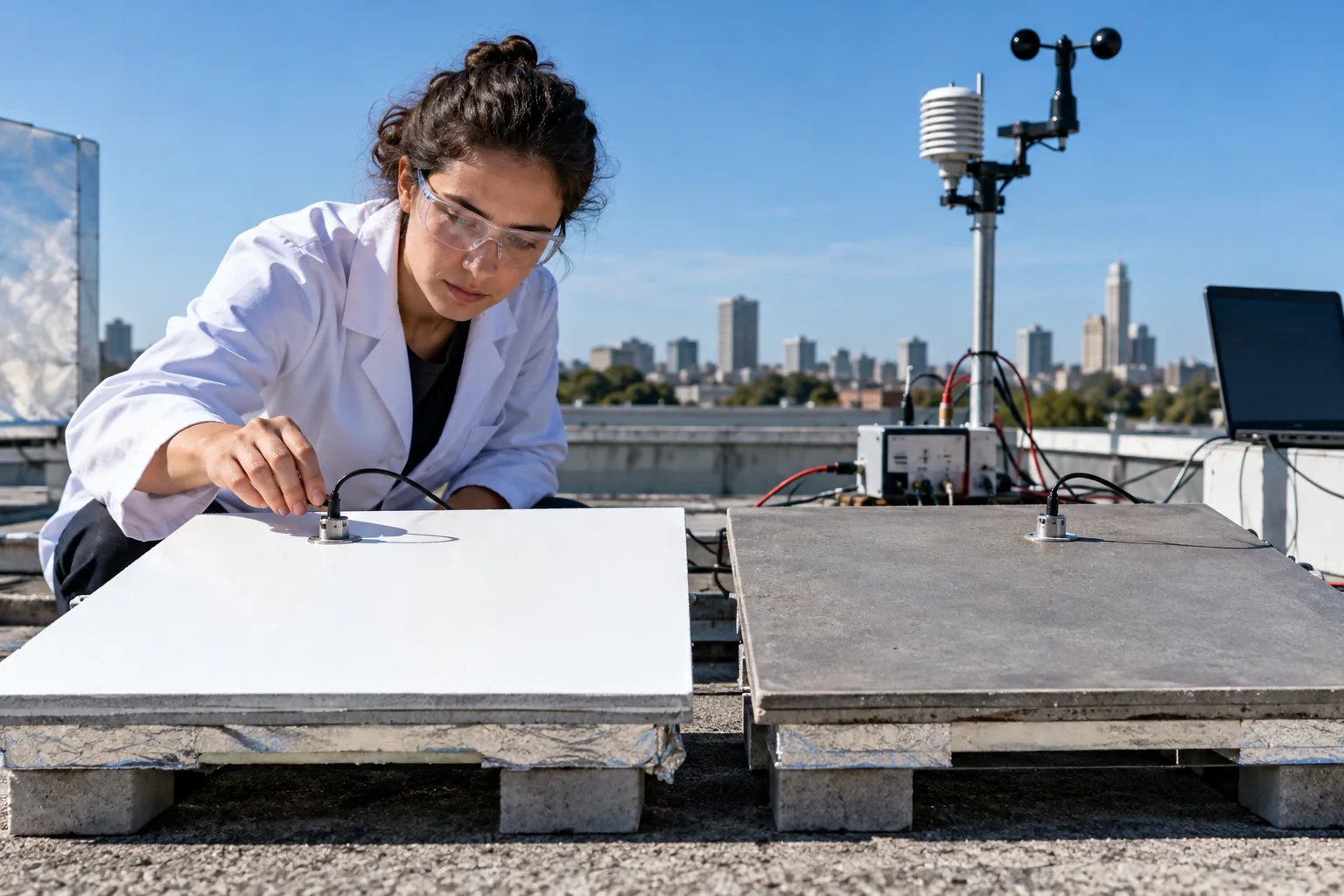
Passive daytime radiative cooling uses surfaces that reflect almost all sunlight while giving off heat as infrared light that escapes through the atmosphere into space. Laboratory and rooftop tests have cooled surfaces several degrees below the surrounding air in full sun without using electricity.
Perennial grains
Perennial grains are cereal crops that live for several years and regrow from the same roots, so farmers do not have to replant them every season. Kernza and perennial rice are the best-documented examples, but yields tend to fall as stands age and soil carbon gains have not been shown at scale.
Protein made from air and electricity
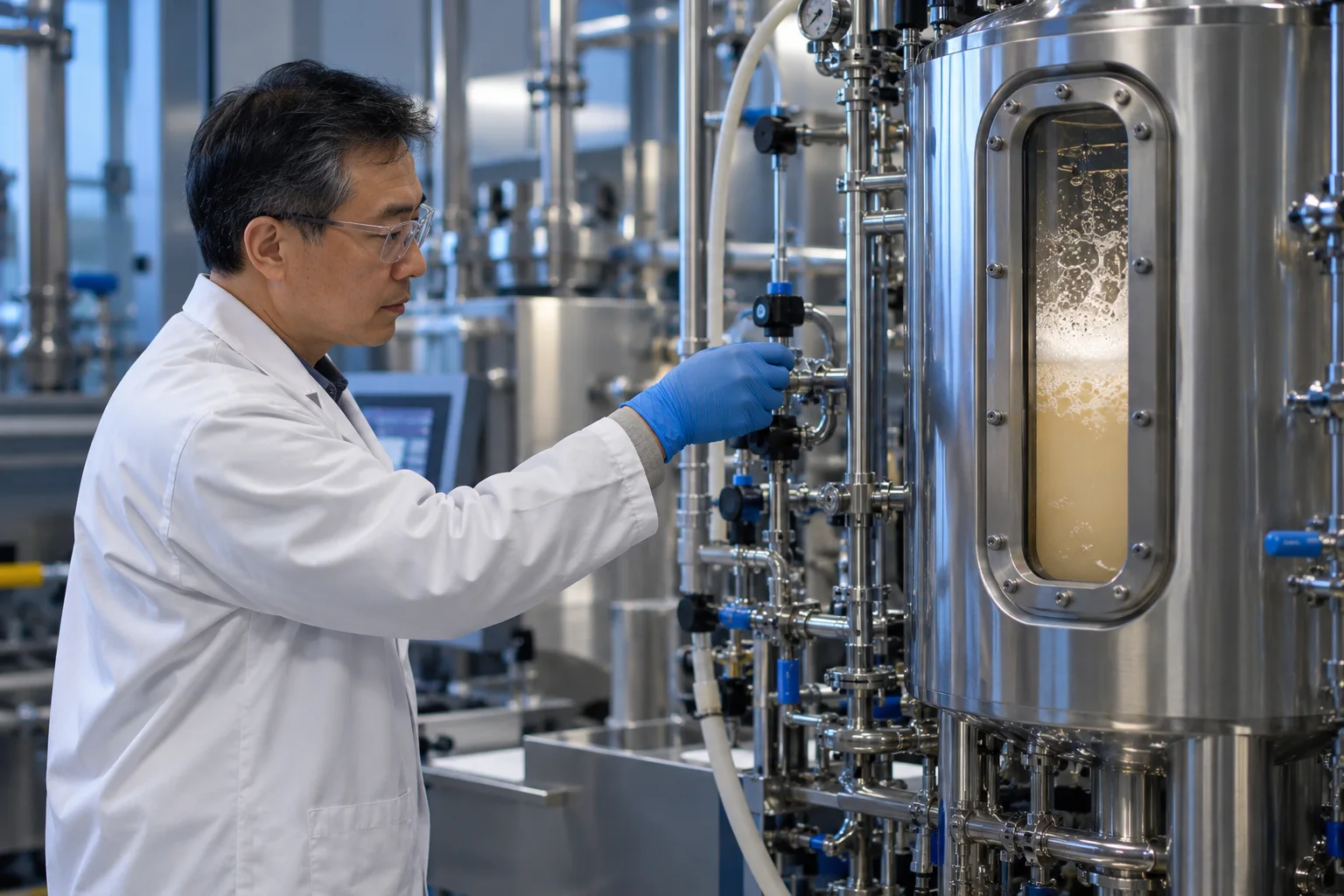
Gas fermentation grows microbes on hydrogen, carbon dioxide and oxygen, then dries the cells into a protein powder for food or feed. One producer reports a food approval in Singapore and a self-affirmed GRAS conclusion in the United States, but published cost and life-cycle studies depend heavily on low-carbon electricity and are mostly modelled rather than measured at scale.
Satellite methane detection
Satellites can spot methane plumes from large leaks at oil, gas, coal and landfill sites. Detection limits depend on instrument design, wind and surface conditions, and the sources reviewed here do not show how often detections lead to repairs.
Seawater electrolysis
Seawater electrolysis uses electricity to split seawater directly into hydrogen and oxygen, without first removing the salt. Laboratory and small-device studies report long test runs, but no complete system has yet been shown to be cheaper, cleaner or more reliable than purifying water first.
Seaweed farming at scale
Farmed seaweed is already produced at scale, and it is being promoted for carbon removal and for cutting methane from cattle. The carbon claim is disputed among ocean scientists. The methane evidence is early, comes from trial results for one red seaweed, and the authors of the summary we checked call for replication.
Stratospheric aerosol injection
Stratospheric aerosol injection is a proposal to cool the Earth by putting reflective particles, or the gases that form them, into the stratosphere. Volcanic eruptions and climate models support the idea, but the sources reviewed describe no outdoor release for this purpose, and the best-known planned test was halted in 2024.
Thermal energy storage
Thermal energy storage keeps heat in materials such as sand, bricks, rock or molten salt so that it can be used later for industrial processes or district heating. Operating systems now exist in Finland and at a steel plant in India, but most performance figures still come from the operators or from modelling.
How far away are we?
A complete map of the world's seabed
Scaling up · 2 of 6 steps done
A full digital twin of the Earth
Pilots · 2 of 8 steps done
AI weather forecasts replacing physics-based models
Pilots · 4 of 7 steps done
Biochar as mainstream carbon removal
Scaling up · 2 of 7 steps done
Buildings cooled without using power
Pilots · 1 of 6 steps done
Buildings that lock away carbon
Pilots · 2 of 6 steps done
Cheap multi-day energy storage for renewables
Pilots · 2 of 7 steps done
Cooling the planet on purpose
Science unproven · 2 of 8 steps done
Cooling without climate-warming refrigerants
Engineering prototypes · 4 of 7 steps done
Crops that keep yielding in drought
Scaling up · 3 of 7 steps done
Cutting cattle methane with seaweed feed
Pilots · 2 of 7 steps done
Drinking water pulled from dry air
Engineering prototypes · 4 of 8 steps done
Electricity from living plants
Engineering prototypes · 4 of 7 steps done
Farming without synthetic fertiliser
Pilots · 2 of 6 steps done
Farmland that pulls CO2 out of the air with crushed rock
Pilots · 3 of 7 steps done
Fighting malaria with gene drive mosquitoes
Science demonstrated · 5 of 10 steps done
Finding every methane leak from space
Pilots · 3 of 7 steps done
Floating cities
Science demonstrated · 3 of 8 steps done
Food made from air and electricity
Pilots · 4 of 8 steps done
Making fuel from sunlight like a leaf
Engineering prototypes · 5 of 8 steps done
Power from ocean temperature differences
Pilots · 2 of 7 steps done
Removing a billion tonnes of CO2 a year
Pilots · 3 of 8 steps done
Removing carbon with the ocean
Pilots · 5 of 9 steps done
Terraforming Mars
Science unproven · 4 of 13 steps done
Tracking wildlife from DNA in water and air
Pilots · 1 of 5 steps done
Breakthroughs
Destination Earth climate digital twin runs global simulations at 5 to 10 km
A Geoscientific Model Development paper published on 14 April 2026 describes the Destination Earth Climate Change Adaptation Digital Twin. Its abstract gives spatial resolutions of 5 to 10 km and hourly outputs, but no cost or throughput figures. The body text reports a current throughput of about 0.5 simulated years per wall-clock day at 5 km, with around 200 computing nodes for the 5 km runs and around 100 for the 10 km runs. It also says a 20-year 5 km ICON simulation typically needs about 0.6 million GPU hours. The simulations run on the LUMI and MareNostrum 5 supercomputers. Atmosphere and land output is hourly, and ocean and sea-ice output is daily.
Satellite-detected Permian methane leak was reported repaired by its operator
Carbon Mapper's Tanager-1 satellite detected a methane plume on 9 October 2024 from a leaking oil and gas gathering pipeline in the Texas Permian Basin. The paper gives an estimated instantaneous emission rate of 7100 ± 1100 kg CH4 per hour from that observation. Carbon Mapper notified federal and state agencies the next day, and the paper states that the operator reported the leak as voluntarily repaired. A later Tanager observation on 24 October 2024 detected no methane at that location. A contemporaneous AVIRIS-3 aircraft analysis of surveys on 1, 9 and 10 October found high emissions at the same location in all seven observations, with an average rate of 4200 ± 500 kg CH4 per hour over at least a 10-day interval.
Field trial on Scottish pasture estimates CO2 removal from basalt using porewater
In a field trial of about 1.5 years on grassland pasture near Stirling, Scotland, crushed basalt applied at 78 and 126 tonnes per hectare gave direct potential CO2 removal of between 0.33 and 0.53 tCO2 per hectare at 5 cm depth, relative to unamended control plots. The estimates are calculated from porewater alkalinity, with porewater sampled from 20 September 2022 to 18 April 2024. After a 22% deduction for outgassing, the range for the significant treatments was 0.257 to 0.413 tCO2 per hectare. The abstract reports figures only for the 78 and 126 tonnes per hectare treatments. The Discussion states that direct removal was between 1.1% and 1.7% of the theoretical maximum.
Preprint: outdoor moisture-driven pilot could deliver about 100 g of CO2 a day
A resin sorbent captured CO2 from ambient air, then released it into an alkaline aqueous medium when moistened. A small pilot-scale system, which the abstract says could deliver about 100 g of CO2 per day, was operated outdoors in a 4.2 m² raceway pond. A lab-scale system delivered about 1 g of CO2 per day in a laminar flow hood. The abstract does not state the outdoor test duration, location or humidity conditions.
Black carbon fell 19 to 43 percent in an 11-year biochar field trial
In a long-term field experiment near Bayreuth, Germany, started in 2010 on a sandy loam Cambisol with 507 mm mean annual precipitation, pine-wood biochar applied at 31.5 Mg per hectare raised black carbon stocks about threefold, to 15 to 20 Mg C per hectare. Between years 3 and 11, black carbon fell by 43 percent in the biochar-only treatment and by 19 percent where biochar was applied with compost. The Results describe the 43 percent decline as significant and the 19 percent decline as not significant, and the authors report no statistically significant difference between the two treatments. Biochar metabolites (BCm) made up less than 3 percent of total black carbon according to the abstract, and the authors conclude that BCm is a negligible loss pathway over this period.
ECMWF puts AIFS machine-learning forecast model into operational use alongside physics model
On 25 February 2025 ECMWF began running its machine-learning model AIFS in operations, side by side with its physics-based Integrated Forecasting System (IFS). ECMWF reports that AIFS outperforms state-of-the-art physics-based models on many measures, including tropical cyclone tracks, with gains of up to 20%, and uses approximately 1,000 times less energy to make a forecast. The announcement does not name the baseline, the measure behind the 20% figure, or the verification period, and it gives no figure for speed.
Pelleted Asparagopsis seaweed cut methane 37.7% on average in grazing steers
In a 70-day trial with 24 Wagyu-Angus crossbred steers on irrigated pasture at a ranch in Montana, steers given pelleted Asparagopsis taxiformis (Brominata) at 20% of pellet composition had an average enteric methane reduction of 37.7% compared with controls, as stated in the paper. Methane was measured with GreenFeed units, which also dispensed the pellets. The abstract reports 115 vs 185 g/d of enteric methane in the optimal and decreasing phases. Average bromoform intake was 193 mg/d. Liveweight, average daily gain and predicted dry matter intake did not differ between groups. Pasture supplied more than 95% of total feed intake.
Angularly asymmetric emitter cools a vertical surface below ambient in peak sunlight
A hierarchically designed, angularly asymmetric, spectrally selective thermal emitter mounted vertically reached about 2.5 degrees C below ambient temperature under peak sunlight of about 920 W per square metre. This was about 4.3 degrees C cooler than a silica-polymer hybrid radiative cooler and 8.9 degrees C cooler than commercial white paint under the same conditions.
COF-999 captures carbon dioxide from open air over more than 100 cycles
An olefin-linked covalent organic framework with polyamines grown in its pores (COF-999) took up 0.96 mmol of CO2 per gram under dry conditions and 2.05 mmol per gram at 50% relative humidity, both from 400 ppm CO2. It reached half capacity in 18.8 minutes, regenerated at 60 degrees C, and retained full performance over more than 100 adsorption-desorption cycles in the open air of Berkeley, California.
Fin-array water harvester prototype projects 5.8 litres per kg per day
A 10-fin prototype, made from a copper sheet between copper foam layers and coated with AQSOA Z02 zeolite, was tested at small scale. Adsorption reached saturation within 30 minutes in experiment and simulation, and condensate was collected, with heat losses and a lag between vapour generation and collection noted. The authors project that a 1 litre bed holding 230 g of sorbent would yield 5.826 litres of water per kg of sorbent per day at 30% relative humidity, or about 1.3 litres per day per device. These yield figures are modelled and extrapolated from the small prototype, not measured at full size. Desorption was tested experimentally with cartridge heaters in a sealed enclosure, and simulated at 90 degrees C using high-density waste heat, which was not tested.
Charged carbon sorbent captures CO2 from simulated air and regenerates at 90 to 100 °C
Activated carbon loaded with hydroxide ions by electrochemical charging (charged-sorbent) captured CO2 from simulated dry air containing 400 ppm CO2 at 30 °C. In a sealed box at 37% relative humidity, CO2 fell from about 500 ppm to about 25 ppm in 25 minutes. The abstract reports regeneration at about 90 to 100 °C. Direct Joule heating at 7 to 8 V raised a 2 × 1 cm piece to about 90 °C within about one minute. The paper reports four proof-of-concept direct air capture cycles using Joule-heating regeneration, although one extended data figure lists five. Dry-air capture tests at 400 ppm ran for ten adsorption-desorption cycles, and a separate test ran 150 cycles at 30% CO2 in nitrogen. All measurements were on small laboratory samples.
Catalyst runs in seawater for 2,800 hours at about 1.25 A per square centimetre
Fan and colleagues report, in Nature Sustainability (published online 9 February 2024), an earth-abundant layered double hydroxide electrocatalyst that sustained seawater electrolysis for over 2,800 hours at about 1.25 A per square centimetre. The authors attribute the stability to carbonate ions between the catalyst layers and graphene quantum dots on its surface, which reduce chloride adsorption and corrosion. In a separate photovoltaic-electrolysis device using the same catalyst for both electrodes, the authors report an 18.1% solar-to-hydrogen efficiency for overall seawater splitting and stability over 200 hours at a working current above 440 mA.